
How to Choose Adjustable Prop Size? A Complete Guide for Construction Projects
Choosing the right Adjustable Prop Size is an important decision in construction, especially when working with RCC slabs, beams, shuttering and formwork systems. The correct prop size helps provide suitable temporary support, maintain alignment and improve construction efficiency.
However, selecting adjustable steel props is not simply about choosing the tallest or strongest-looking product. Every construction project has different height requirements, loading conditions and support arrangements.
This guide explains how to choose the right Adjustable Prop Size, understand technical specifications and avoid common purchasing mistakes.
Quick Answer: How to Choose Adjustable Prop Size?
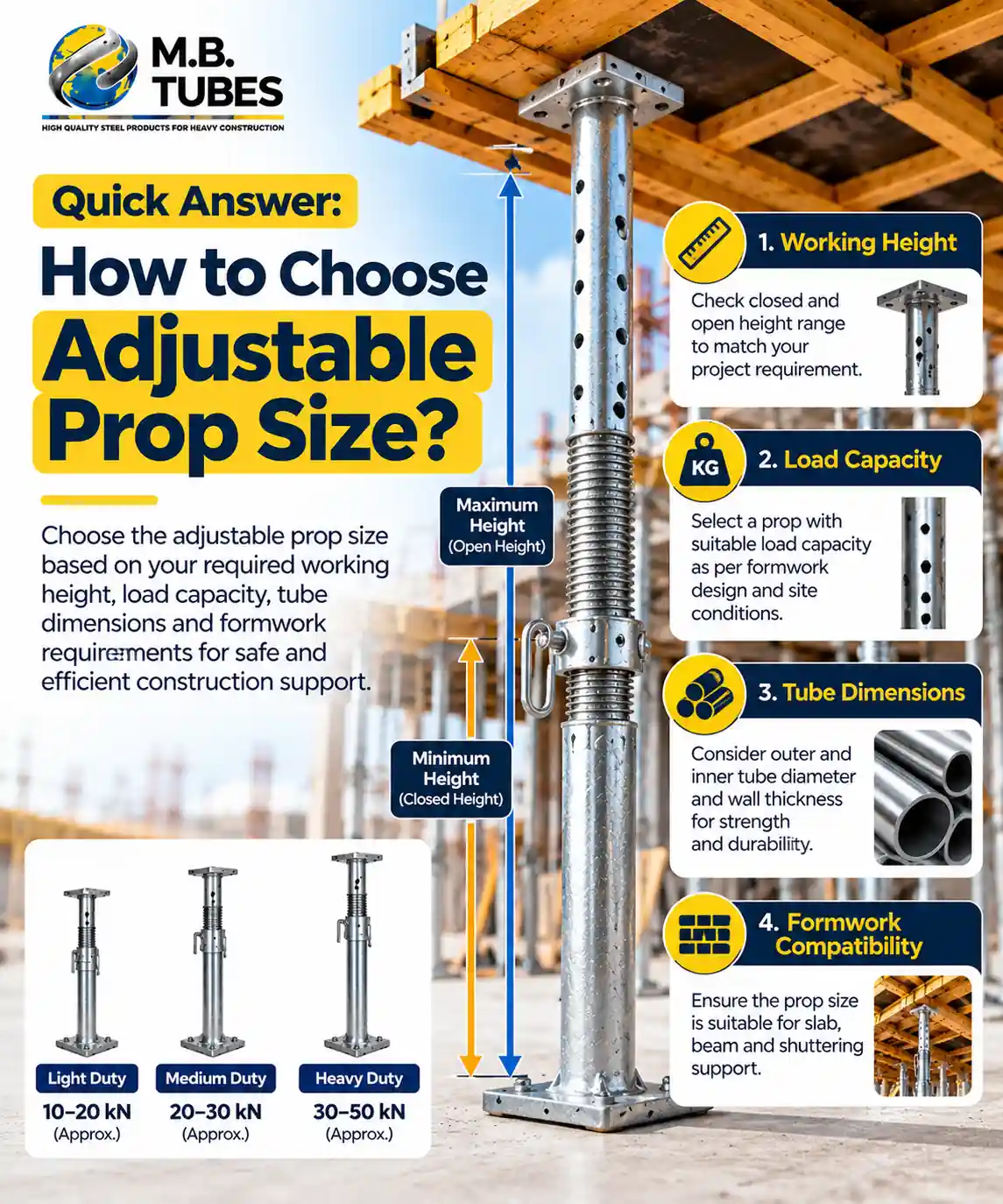
The correct Adjustable Prop Size depends on the required working height, closed and open height range, load capacity, tube diameter, wall thickness and construction application.
Before selecting a prop, check:
- Required support height
- Minimum and maximum adjustable height
- Load capacity at the intended extension
- Inner and outer tube dimensions
- Formwork and shuttering requirements
- Manufacturer specifications
Important: A prop that reaches the required height is not automatically suitable for the expected construction load.
What Is Adjustable Prop Size?
Adjustable Prop Size refers to the dimensional specifications of a telescopic steel prop used for temporary vertical support during construction.
Unlike fixed-length supports, adjustable props contain two telescoping steel tubes that allow their height to be changed within a specified range.
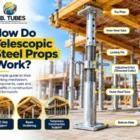
A typical adjustable steel prop includes an outer steel tube, inner steel tube, locking pin, threaded adjustment collar and end plates.
These components work together to provide height adjustment and transfer loads through the temporary support system.
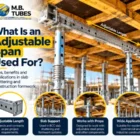
Adjustable props are commonly used for:
- RCC slab formwork
- Beam shuttering
- Concrete construction
- Temporary vertical support
- Commercial and industrial building projects
The required size depends on the actual support arrangement and approved construction design.
Understanding Adjustable Prop Sizes and Specifications
Before ordering adjustable steel props, it is important to understand the measurements manufacturers provide.
Specification | What It Means |
Closed Height | Minimum adjustable prop height |
Open Height | Maximum adjustable prop height |
Outer Tube Diameter | Diameter of the main supporting tube |
Inner Tube Diameter | Diameter of the telescoping tube |
Wall Thickness | Thickness of the steel tube walls |
Load Capacity | Permitted load under specified conditions |
Plate Size | Dimensions of the supporting end plates |
Surface Finish | Painted, coated or another specified finish |
For example, an adjustable steel prop may have a 3-metre closed height and 5-metre open height.
This means its nominal adjustment range extends from 3 metres to 5 metres. However, the permissible load must still be checked at the selected working height.
Why Does Adjustable Prop Height Matter?
Height is one of the most important factors when selecting an Adjustable Prop Size.
Closed Height
The closed height represents the minimum length of the adjustable prop when its telescopic section is retracted.
It helps determine whether the prop can fit beneath the required formwork arrangement.
Open Height
The open height represents the maximum extension permitted by the product design.
A prop should never be extended beyond its manufacturer’s specified limit.
Working Height
The working height is the actual height required at the construction site.
For example, if a project requires temporary support at 3.5 metres, the selected prop must accommodate that height while meeting the applicable load requirements.
Remember: Maximum extension and maximum load capacity are not necessarily available simultaneously.
How Does Load Capacity Affect Adjustable Prop Size?
Load capacity is another essential selection factor.
An adjustable prop transfers vertical loads from the supported formwork arrangement toward its supporting surface.
The load it can safely support depends on several factors, including:
- Steel grade and tube dimensions
- Wall thickness
- Prop extension height
- Locking and adjustment mechanism
- Vertical alignment
- End support conditions
- Manufacturer’s tested load rating
Generally, increasing a telescopic prop’s extension can reduce its available load capacity.
Therefore, selecting a prop based only on its maximum height can lead to an unsuitable choice.
Always check the manufacturer’s load-capacity chart for the intended working height and have the temporary works arrangement verified by a qualified professional.
How to Choose the Right Adjustable Prop Size: Step by Step
Follow these practical steps before purchasing adjustable steel props.
Step 1: Identify the Construction Application
First, understand where the props will be used.
A slab formwork arrangement may have different support requirements from beam shuttering or another temporary support application.
The application determines the necessary height, spacing and support design.
Step 2: Measure the Required Support Height
Measure the actual distance between the supporting surface and the point where the prop will support the formwork.
Account for supporting beams, plates and other components included in the approved arrangement.
Step 3: Check the Adjustment Range
Compare the required working height with the manufacturer’s closed and open height specifications.
Choose a prop whose permitted adjustment range accommodates the required position.
Step 4: Verify the Load Requirement
Determine the expected load using the approved temporary works design.
Check the manufacturer’s permitted load at the intended extension rather than relying on a general product rating.
Step 5: Examine Material and Dimensions
Confirm the steel grade, tube diameter, wall thickness, end plates and adjustment mechanism.
These specifications should match the project’s technical requirements.
Step 6: Confirm Quantity and Compatibility
Determine the required number of props and their spacing from the engineered formwork layout.
Also verify compatibility with the supporting beams, shuttering components and other accessories.

Adjustable Props for Different Construction Applications
Different projects require different temporary support arrangements.
Application | Important Selection Factor |
RCC Slab Support | Working height and design load |
Beam Shuttering | Beam load and support arrangement |
Commercial Buildings | Repeated use and specified dimensions |
Industrial Construction | Project-specific loading and durability |
Temporary Formwork | Compatibility and adjustment range |
There is no universal Adjustable Prop Size suitable for every construction project.
Even two projects with similar heights may require different prop configurations because their loads and support layouts differ.
Common Mistakes When Choosing Adjustable Prop Size
Selecting adjustable props without checking their specifications can create avoidable project problems.
Mistake 1: Choosing Props Only by Height
A prop may reach the required height but lack sufficient permitted load capacity at that extension.
Mistake 2: Ignoring Tube Specifications
Tube diameter, wall thickness and material grade influence prop performance.
Mistake 3: Assuming Every Prop Has the Same Capacity
Different models can have significantly different load ratings, even when their adjustment ranges appear similar.
Mistake 4: Overlooking the Supporting Surface
A suitable prop still requires appropriate bearing support, alignment and installation conditions.
Mistake 5: Purchasing Without Technical Confirmation
Ordering props without drawings, loading requirements or manufacturer specifications can result in unsuitable materials.
Adjustable Steel Props from M.B. Tubes
M.B. Tubes and Khambati Steel provide steel products and construction support solutions, including adjustable steel props and related formwork components.
When requesting adjustable props for a construction project, buyers should share the required height range, application, loading requirements, quantity and relevant technical specifications.
Providing complete project details helps identify suitable product options and reduces uncertainty during procurement.
Conclusion
Choosing the correct Adjustable Prop Size requires more than checking a product’s minimum and maximum height.
The most effective approach is to measure the working height, verify the load requirement, review technical specifications and confirm compatibility with the formwork system.
For construction projects, M.B. Tubes and Khambati Steel can assist with product information and adjustable steel prop requirements based on the specifications provided.
The right adjustable prop is the one that meets both the height requirement and the verified temporary support design.
Frequently Asked Questions
What is the standard Adjustable Prop Size?
Adjustable props are available in different closed and open height ranges. There is no single standard size suitable for every application. Selection depends on project requirements and manufacturer specifications.
How do I calculate the required adjustable prop height?
Measure the distance between the supporting surface and the required formwork support point. Account for supporting components and verify the height against the prop’s permitted adjustment range.
Does a longer adjustable prop support more weight?
Not necessarily. A prop’s available load capacity may decrease as its extension increases. Always consult the manufacturer’s load chart for the intended working height.
Can adjustable steel props be reused?
Yes, suitable adjustable steel props can be reused when their condition, inspection results and manufacturer requirements permit. Damaged or unsuitable components should not be used.
Which adjustable prop is best for RCC slab construction?
The appropriate prop depends on the slab formwork design, working height, loading conditions and support spacing. A qualified professional should verify the proposed arrangement before use.