
How Does Pier Formwork Work? A Complete Guide to Bridge Pier Construction
Bridge construction requires strong foundations, accurate structural dimensions, and reliable concrete forming systems. One important component in this process is Pier Formwork, which helps shape and support concrete during the construction of bridge piers.
Whether building highway bridges, flyovers, railway bridges, or elevated infrastructure, selecting the right Pier Formwork system is essential for maintaining structural accuracy and improving construction efficiency.
In this guide, we will explain how Pier Formwork works, its components, installation process, applications, benefits, and important factors to consider when selecting a system.
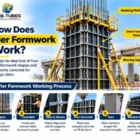
Quick Answer: How Does Pier Formwork Work?
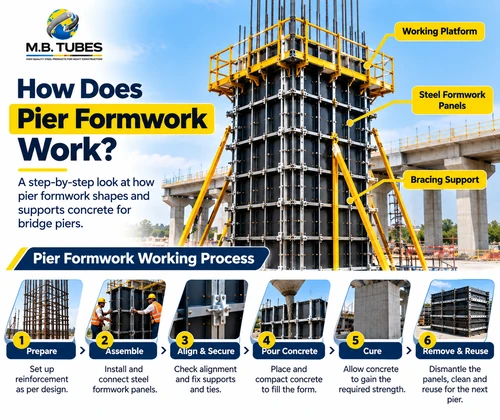
Pier Formwork works by creating a temporary mould around the reinforcement structure of a bridge pier. Steel formwork panels are assembled according to the required shape and dimensions, secured with suitable connectors and bracing, and checked for alignment before concrete is poured.
The formwork holds freshly placed concrete in position while it develops sufficient strength. Once the required stripping conditions are achieved, the panels are carefully removed and can be reused for the next construction stage.
The basic process is:
Prepare → Assemble → Align → Secure → Pour Concrete → Cure → Remove → Reuse
What Is Pier Formwork?
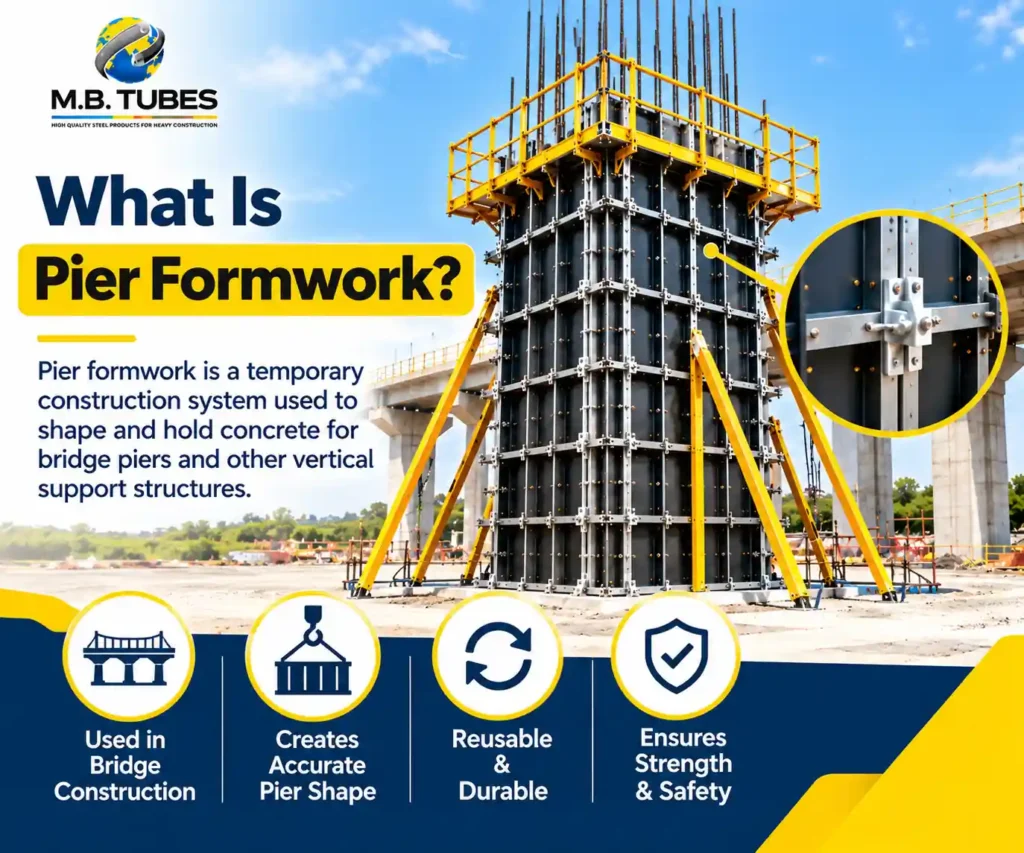
Pier Formwork is a temporary construction system used to shape and contain freshly poured concrete when constructing bridge piers and other vertical concrete supports.
Bridge piers transfer loads from the bridge superstructure to the foundation. Their shape, dimensions, alignment, and concrete quality are important to overall structural performance.
Steel Pier Formwork typically consists of interconnected panels and supporting components designed to maintain the required concrete shape during casting.
Depending on project requirements, formwork may be designed for:
- Rectangular bridge piers
- Circular bridge piers
- Square concrete columns
- Tapered or specially shaped piers
- Large infrastructure support structures
The formwork design must match approved structural drawings and construction requirements.
How Does Pier Formwork Work? Step-by-Step Process
Understanding the working process helps contractors plan materials, installation, concrete placement, and formwork reuse.
Step 1: Review Structural Drawings and Pier Dimensions
The first step is to study the structural drawings and identify the pier’s required shape, height, width, and other dimensions.
Important details include the pier geometry, concrete pressure requirements, reinforcement arrangement, construction joints, and planned casting stages.
For tall bridge piers, the structure may be constructed in multiple lifts rather than one continuous concrete pour.
Accurate planning helps determine the required panel configuration and supporting accessories.
Step 2: Prepare the Reinforcement and Construction Area
Before installing Pier Formwork, the construction team prepares the reinforcement cage and checks the working area.
Reinforcement must be positioned according to the approved design, including the specified concrete cover and any required embedded items.
The formwork contact surfaces should also be clean and suitable for installation.
Proper preparation helps reduce alignment problems and unnecessary adjustments during assembly.
Step 3: Assemble the Steel Formwork Panels
Steel formwork panels are positioned around the reinforcement cage to create the required pier shape.
The panels are connected using compatible clamps, bolts, ties, and other fastening components.
The complete assembly must be sufficiently rigid to resist the expected concrete pressure and construction loads.
For repetitive bridge construction, modular steel panels can simplify planning because compatible components may be reused across similar pier sections.
Step 4: Check Alignment and Secure the Formwork
Once the panels are assembled, the construction team checks their vertical alignment, dimensions, and position.
Supporting systems such as braces, ties, and other engineered restraints help maintain the required geometry during concrete placement.
Checks should include:
- Verticality and overall alignment
- Panel joints and connections
- Required pier dimensions
- Bracing and support arrangements
- Stability under expected concrete pressure
These checks are important because movement or deformation during casting can affect the finished pier.
Step 5: Pour Concrete into the Formwork
After inspection and approval, concrete is placed inside the Pier Formwork according to the approved pouring procedure.
Fresh concrete creates lateral pressure against the formwork panels. The pressure depends on several factors, including placement rate, concrete properties, temperature, vibration, and pour height.
The formwork system must be designed to withstand these conditions.
Concrete placement and compaction should be carefully controlled to support proper consolidation and avoid unnecessary pressure or displacement.
Step 6: Allow Concrete to Develop Strength
After placement, the concrete is protected and cured according to the project specifications.
The formwork continues to maintain the required shape while the concrete develops strength.
The time required before removing panels depends on concrete strength development, environmental conditions, structural requirements, and the approved construction procedure.
Formwork should not be removed simply because a fixed number of hours has passed.
Step 7: Remove and Reuse the Formwork
Once the concrete has reached the required stripping strength and removal is authorized, the formwork panels are carefully dismantled.
Panels are cleaned, inspected, and prepared for their next use.
Damaged connections, bent panels, and worn components should be repaired or replaced before reuse.
This repeated-use capability is one reason steel Pier Formwork is commonly considered for large bridge and infrastructure projects.
Main Components of a Pier Formwork System
A complete Pier Formwork arrangement includes several components that work together.
Component | Main Function |
Steel Formwork Panels | Create the required concrete pier shape |
Connecting Clamps and Bolts | Join adjacent formwork panels |
Tie Rods and Nuts | Help resist concrete pressure where specified |
Walers and Supporting Members | Distribute loads and stiffen the panels |
Bracing System | Maintain alignment and stability |
Working Platforms | Provide access for authorized construction activities |
Lifting Attachments | Facilitate handling where specifically designed and approved |
The exact components depend on the pier geometry, formwork design, and site requirements.
Where Is Pier Formwork Used?
Pier Formwork is used in infrastructure projects requiring reinforced concrete vertical support structures.
1. Highway Bridges
Bridge piers support elevated highway structures and transfer loads to their foundations.
Steel Pier Formwork helps create the required concrete geometry for these supporting elements.
2. Flyover Construction
Urban flyovers often include multiple similar pier structures.
Reusable Pier Formwork can support repeated casting operations when the pier dimensions and approved construction methods are compatible.
3. Railway Bridges
Railway bridge projects require accurately constructed supporting elements designed for their specified structural loads.
Pier Formwork is selected according to the geometry and engineering requirements of each project.
4. Metro and Elevated Infrastructure
Elevated metro corridors frequently use concrete piers with repetitive structural arrangements.
Modular formwork can help organize repeated construction cycles and material movement between locations.
5. Large Infrastructure Projects
Pier Formwork may also be used for suitable concrete supports in viaducts and other engineered infrastructure structures.
Key Benefits of Steel Pier Formwork
Accurate Structural Dimensions
Properly designed and installed steel panels help maintain the specified shape and dimensions of concrete piers.
Reusable Construction System
Steel panels can be reused across multiple casting cycles when they remain in acceptable condition and suit the next application.
Consistent Concrete Surfaces
Clean, properly aligned formwork can contribute to a consistent concrete finish. The final result also depends on concrete quality, joint sealing, compaction, and workmanship.
Suitable for Repetitive Projects
When several piers have similar dimensions, reusable panels can reduce repeated fabrication and simplify construction planning.
Flexible Project Configuration
Modular and customized steel formwork arrangements can accommodate different pier shapes and construction requirements, subject to engineering design.
How to Choose the Right Pier Formwork for Your Project
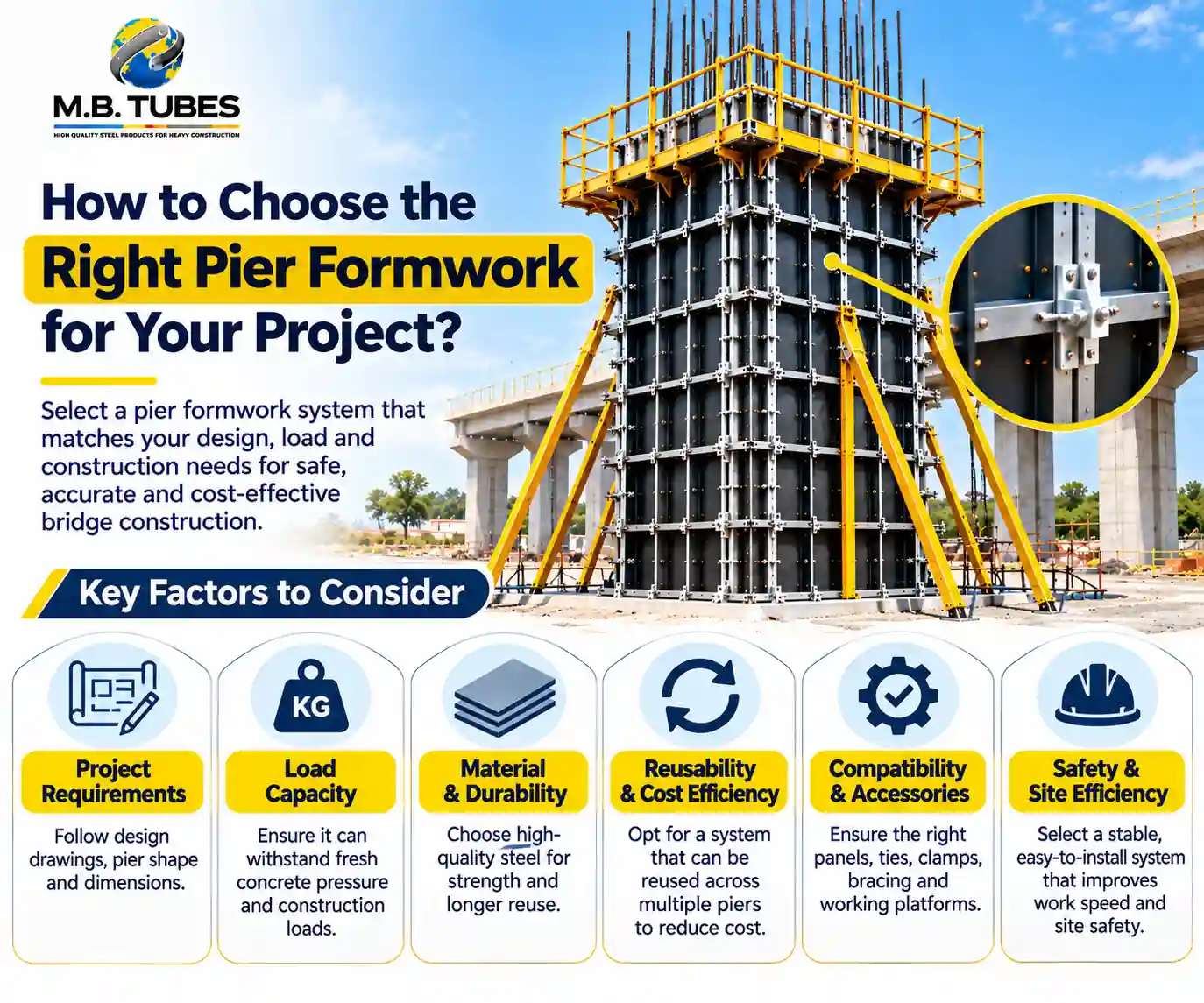
Selecting Pier Formwork requires more than comparing panel prices.
First, understand the pier geometry. Check whether the structure is circular, rectangular, tapered, or specially shaped.
Second, evaluate concrete pressure. The formwork must be engineered for the planned placement method and expected loads.
Third, check panel dimensions and connections. The selected components must match the approved drawings and formwork design.
Fourth, consider durability and reuse. For repetitive construction, assess panel condition, handling requirements, maintenance, and expected casting cycles.
Finally, review supporting components. Confirm that the complete system includes compatible connections, ties, bracing, platforms, and other required accessories.
A coordinated formwork system helps reduce avoidable installation problems and supports an organized construction process.
Common Mistakes to Avoid When Using Pier Formwork
Even suitable formwork materials can create problems when installation and planning are inadequate.
Common mistakes include choosing panels without reviewing structural drawings, overlooking fresh-concrete pressure, using incompatible connections, failing to check alignment, and removing formwork before the required concrete strength is achieved.
Poor cleaning and storage can also reduce the usable life of steel panels.
The correct approach is to treat Pier Formwork as a complete engineered system rather than a collection of individual steel panels.
Pier Formwork Solutions from Khambati Steel & M.B. Tubes
Khambati Steel & M.B. Tubes offers steel formwork and construction support products for infrastructure and concrete construction applications.
The broader product range includes steel formwork systems, shuttering plates, adjustable props, adjustable spans, scaffolding components, and construction accessories.
For bridge projects, contractors should share their structural drawings, required dimensions, material specifications, and intended application to determine suitable product options and customization requirements.
Choosing compatible components and confirming the engineered formwork arrangement are important steps before procurement.
Conclusion
Pier Formwork plays an important role in creating accurate concrete supports for bridges, flyovers, railway structures, and elevated infrastructure.
Its working process begins with structural planning and continues through panel assembly, alignment, concrete placement, curing, dismantling, and reuse.
For successful construction, contractors should focus on the complete formwork system, not only the steel panels.
Planning the Right Pier Formwork → Selecting Compatible Components → Proper Installation → Controlled Concrete Placement → Inspection and Reuse can support a more organized and efficient construction process.
For suitable steel formwork and construction support solutions, Khambati Steel & M.B. Tubes can assist with product selection based on project specifications.
Frequently Asked Questions About Pier Formwork
What is the main purpose of Pier Formwork?
The main purpose of Pier Formwork is to create a temporary mould that holds freshly placed concrete in the required shape and position during bridge pier construction. It helps maintain the specified dimensions and alignment while the concrete develops sufficient strength.
Is steel Pier Formwork reusable?
Yes. Steel Pier Formwork panels can generally be reused when their dimensions remain suitable and the components are properly cleaned, inspected, and maintained. Reusability depends on panel condition, project requirements, handling practices, and the formwork system’s design.
Can Pier Formwork be used for circular bridge piers?
Yes. Pier Formwork can be designed for circular, rectangular, square, and other specified pier shapes. Circular piers require appropriately shaped panels and compatible connections that match the approved structural drawings and construction requirements.
How long should Pier Formwork remain in place?
The removal time depends on concrete strength development, structural requirements, environmental conditions, and the approved stripping procedure. There is no single removal period suitable for every bridge pier. The responsible engineer must authorize removal based on project requirements.
What should contractors check before buying Pier Formwork?
Contractors should check pier shape, dimensions, casting height, expected concrete pressure, panel specifications, connection details, bracing requirements, lifting arrangements, reuse expectations, and compatibility with the construction method. Providing complete project drawings helps suppliers identify suitable options.