
Introduction
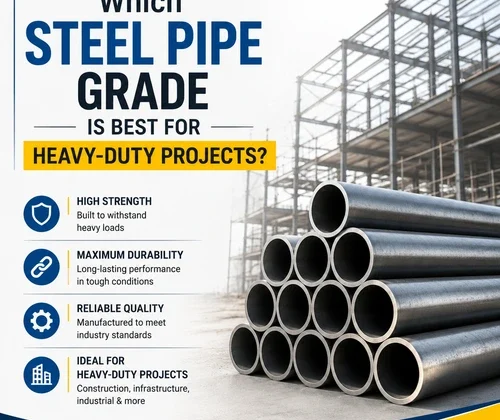
Selecting the right steel pipe grade is one of the most important decisions in any industrial or construction project. Steel pipes are responsible for supporting heavy loads, transporting fluids, and providing structural strength in demanding environments. Choosing the wrong grade can lead to reduced performance, higher maintenance costs, and even safety concerns.
Modern industries rely on premium Steel Pipes & Tubes because they offer exceptional strength, durability, and resistance to harsh operating conditions. Whether you’re building factories, warehouses, commercial structures, or industrial plants, understanding steel pipe grades helps you make a smarter investment.
This guide explains the most suitable steel pipe grades for heavy-duty applications and the key factors you should consider before making a purchase.
Why Steel Pipe Grade Matters
Steel pipe grade determines the mechanical strength, chemical composition, durability, and pressure-handling capability of the pipe.
Using the correct grade provides several advantages:
- Higher structural strength
- Better load-bearing performance
- Longer service life
- Improved corrosion resistance
- Reduced maintenance costs
- Enhanced project safety
For heavy-duty applications, pipe quality should never be compromised.
Common Steel Pipe Grades Used in Heavy-Duty Projects
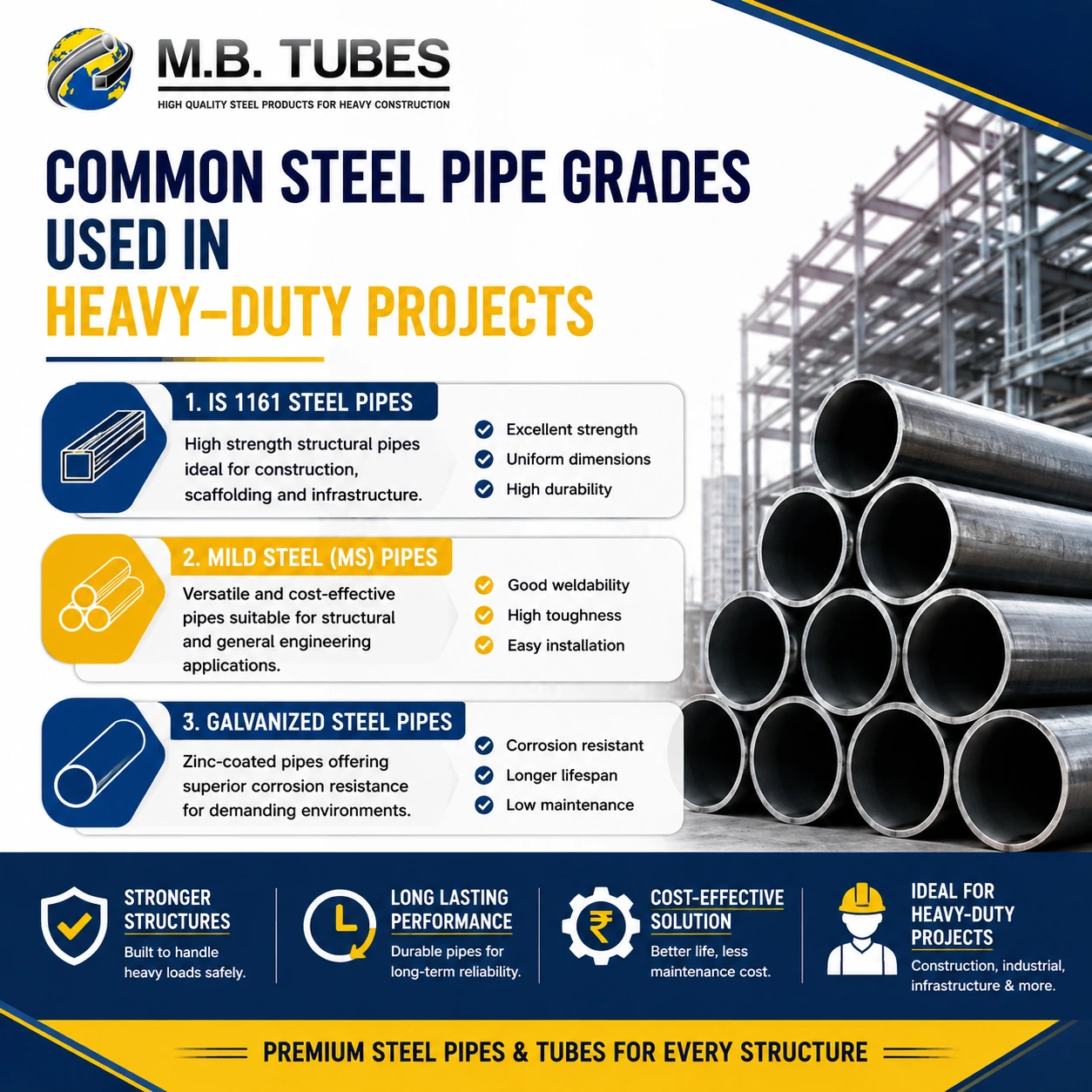
1. IS 1161 Steel Pipes
IS 1161 steel pipes are widely used in structural applications where strength and reliability are essential.
They are commonly used for:
- Industrial buildings
- Steel structures
- Warehouses
- Scaffolding systems
- Infrastructure projects
Benefits include:
- Excellent strength
- Uniform dimensions
- High durability
- Easy fabrication
2. Mild Steel (MS) Pipes
MS pipes remain one of the most popular choices for construction and engineering projects.
They offer:
- Good weldability
- High toughness
- Easy installation
- Cost-effective performance
Applications include:
- Structural fabrication
- Industrial sheds
- Pipe supports
- Construction frameworks
3. Galvanized Steel Pipes
Galvanized pipes include a protective zinc coating that helps prevent corrosion.
Best suited for:
- Outdoor installations
- Water supply systems
- Industrial facilities
- Agricultural projects
Advantages include:
- Excellent corrosion resistance
- Longer lifespan
- Lower maintenance
Factors to Consider Before Choosing Steel Pipes & Tubes
1. Load Capacity
Heavy-duty projects demand pipes capable of handling significant structural loads.
Always choose pipes designed for the required load-bearing capacity.
2. Material Quality
High-quality raw materials improve durability and reduce the chances of deformation or failure.
Look for pipes manufactured using premium-grade steel.
3. Pipe Thickness
Wall thickness directly affects:
- Strength
- Pressure resistance
- Structural stability
- Service life
Choose the thickness according to your project’s engineering requirements.
4. Corrosion Resistance
Projects located in humid, coastal, or industrial environments require pipes with better corrosion protection.
Galvanized or coated pipes offer improved performance in such conditions.
5. Manufacturing Standards
Always select Steel Pipes & Tubes manufactured according to recognized quality standards.
Consistent manufacturing ensures:
- Accurate dimensions
- Better strength
- Reliable performance
- Safer construction
Benefits of Choosing Premium Steel Pipes & Tubes
Superior Strength
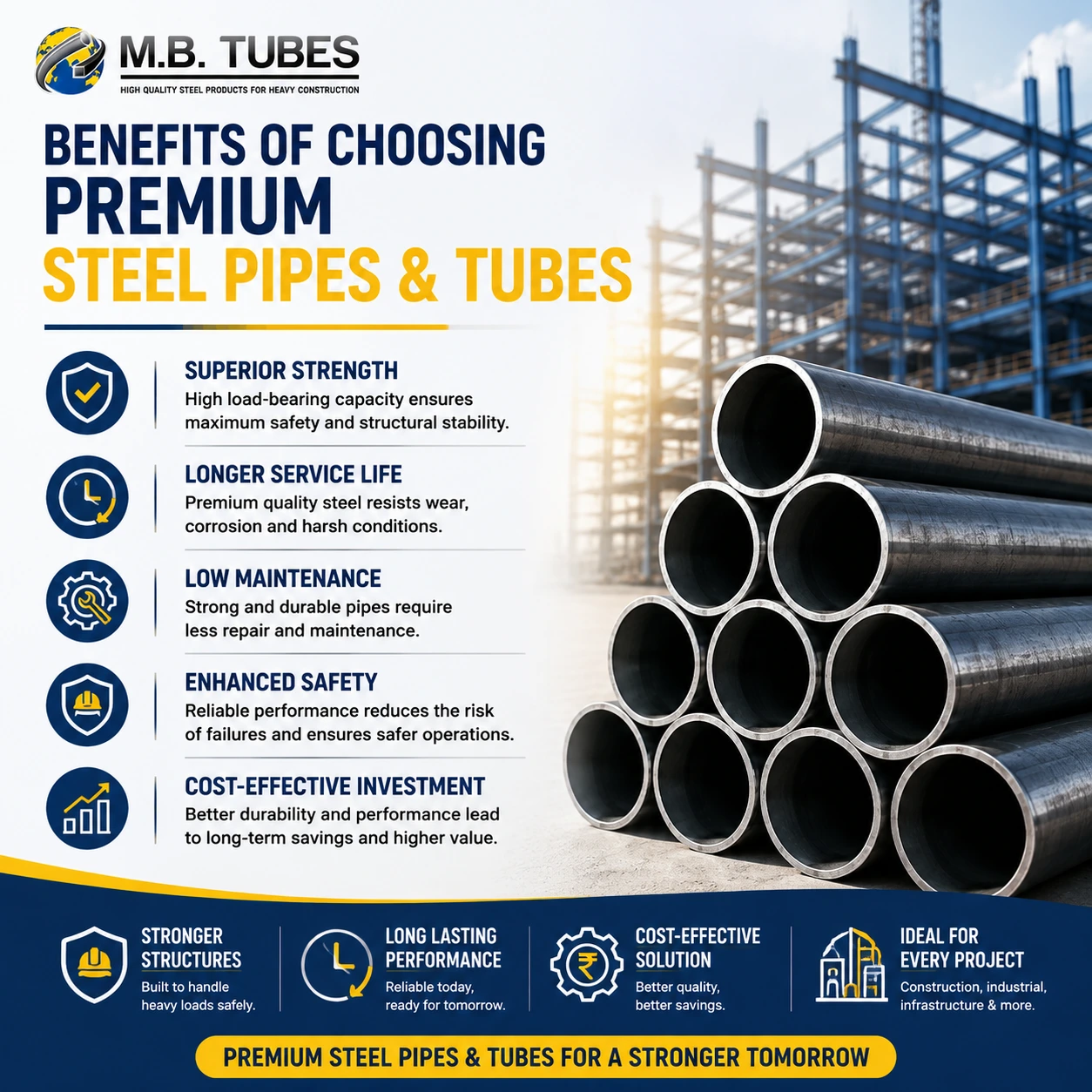
High-grade steel pipes are designed to withstand heavy structural loads without compromising performance.
Longer Service Life
Quality pipes resist wear, corrosion, and environmental damage, ensuring reliable long-term performance.
Improved Safety
Reliable steel pipes contribute to stronger and safer structures by maintaining structural integrity.
Lower Maintenance
Premium materials reduce the need for frequent repairs and replacements, saving both time and money.
Cost-Effective Investment
Although high-quality pipes may have a higher initial cost, they provide better long-term value through durability and reduced maintenance.
Common Mistakes to Avoid
Many buyers make purchasing decisions based only on price.
Avoid these common mistakes:
- Choosing the cheapest pipe available
- Ignoring pipe grade specifications
- Buying from unverified suppliers
- Overlooking manufacturing standards
- Selecting incorrect wall thickness
- Ignoring corrosion protection requirements
Quality should always take priority over short-term savings.
Why Choosing the Right Manufacturer Matters
The quality of Steel Pipes & Tubes depends not only on the pipe grade but also on the manufacturer.
A trusted manufacturer provides:
- Premium raw materials
- Precision manufacturing
- Consistent quality control
- Reliable customer support
- Industry-standard production
Working with an experienced manufacturer ensures better product performance and peace of mind.
Conclusion
Selecting the right steel pipe grade is essential for ensuring the success of heavy-duty construction and industrial projects. The correct grade provides greater strength, durability, safety, and long-term value while reducing maintenance and operational costs.
Premium Steel Pipes & Tubes manufactured to recognized quality standards deliver reliable performance across a wide range of demanding applications. Instead of focusing only on price, evaluate material quality, pipe grade, wall thickness, corrosion resistance, and manufacturing standards before making your decision.
A quality steel pipe is not just another construction material—it’s an investment in the strength, safety, and longevity of your entire project.
Frequently Asked Questions (FAQs)
1. Which steel pipe grade is best for heavy-duty construction?
IS 1161 structural steel pipes and premium mild steel pipes are among the most preferred options for heavy-duty construction because of their strength and durability.
2. Why is steel pipe grade important?
The pipe grade determines its strength, load capacity, durability, and suitability for specific industrial applications.
3. Are galvanized steel pipes suitable for industrial use?
Yes. Galvanized steel pipes provide excellent corrosion resistance, making them ideal for outdoor and industrial environments.
4. What factors should I consider before buying Steel Pipes & Tubes?
Consider pipe grade, wall thickness, material quality, corrosion resistance, manufacturing standards, and application requirements.
5. Do premium Steel Pipes & Tubes reduce maintenance costs?
Yes. High-quality pipes last longer, resist damage, and require fewer repairs, resulting in lower long-term maintenance expenses.