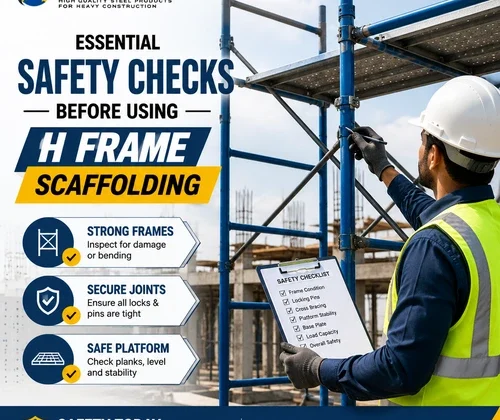

Every Safe Project Starts Before the First Worker Climbs
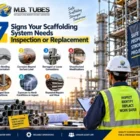
Construction projects move fast, but safety should never be rushed. Before a single worker steps onto scaffolding, every component should be inspected carefully. A few minutes spent checking the system can prevent accidents, reduce downtime, and protect both workers and project investments.
Whether you’re constructing commercial buildings, industrial facilities, or infrastructure projects, a properly inspected scaffolding system creates a safer and more productive work environment.
Working with a trusted H Frame Scaffolding Manufacturer in Madhya Pradesh ensures your scaffolding is built for strength, reliability, and long-term performance.
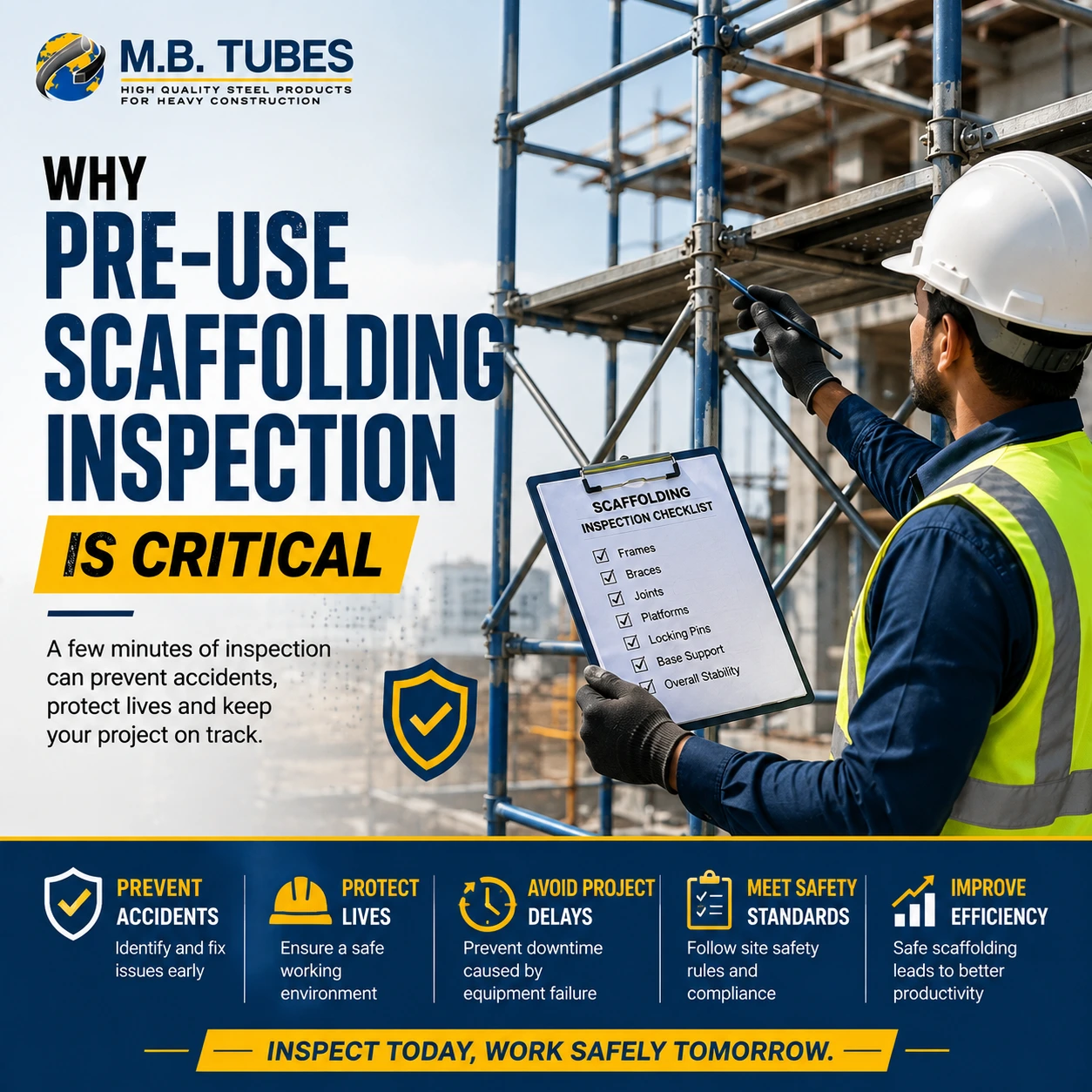
Why Pre-Use Scaffolding Inspection Is Critical
Scaffolding carries workers, tools, and construction materials at various heights. Even a minor defect can compromise the stability of the entire structure.
Routine inspections help you:
- Prevent workplace accidents
- Detect damaged components early
- Improve worker confidence
- Meet safety compliance requirements
- Reduce costly project delays
Safety inspections are not just a checklist—they are an essential part of every successful construction project.
1. Inspect Every Frame for Damage
The H Frame forms the backbone of the scaffolding system.
Before installation, examine each frame for:
- Bent sections
- Cracks
- Broken welds
- Rust damage
- Deformed joints
Never use damaged frames, even if the defect appears minor.
2. Verify the Foundation Is Strong and Level
Even premium scaffolding cannot perform safely on an unstable surface.
Before erecting scaffolding:
- Check ground stability
- Remove loose debris
- Use base plates where required
- Ensure proper leveling
- Avoid uneven or waterlogged areas
A stable foundation ensures maximum structural stability.
3. Check Locking Pins and Connections
Loose connections are among the most common causes of scaffolding failure.
Ensure that:
- Locking pins are installed correctly
- Cross braces are fully secured
- All joints fit tightly
- Connection points show no wear
Every connection contributes to the strength of the overall structure.
4. Examine Cross Bracing Carefully
Cross braces provide lateral stability and prevent movement during work.
Inspect for:
- Bent braces
- Missing locking clips
- Damaged ends
- Loose fittings
Properly installed bracing significantly improves scaffolding safety.
5. Confirm Platform Stability
Working platforms should provide safe footing for workers.
Check that:
- Platforms are level
- Boards are undamaged
- No gaps exist between sections
- Anti-slip surfaces remain effective
- Materials are securely positioned
Stable platforms improve worker confidence and productivity.
6. Never Exceed Load Capacity
Overloading scaffolding places unnecessary stress on the entire system.
Avoid:
- Storing excessive materials
- Overcrowding workers
- Uneven weight distribution
Always follow the manufacturer’s recommended load limits.
7. Inspect Guardrails and Safety Accessories
Guardrails reduce the risk of falls, especially when working at height.
Verify that:
- Guardrails are securely fixed
- Toe boards are installed
- Access ladders remain stable
- Safety gates function properly
These components provide additional protection throughout the project.
8. Look for Signs of Corrosion
Construction equipment is often exposed to rain, humidity, and chemicals.
Inspect scaffolding for:
- Surface rust
- Corrosion near joints
- Peeling protective coating
- Weak metal sections
Replacing corroded components improves overall safety.
9. Check Vertical Alignment
A properly aligned scaffolding system distributes loads evenly.
Before use, confirm:
- Frames are vertical
- Braces are correctly positioned
- No leaning sections exist
- All supports remain balanced
Good alignment prevents unnecessary structural stress.
10. Conduct a Final Site Safety Walk
Before allowing workers to begin, perform one final inspection.
Confirm:
- All components are locked
- Platforms are secure
- Access routes are clear
- Tools are safely stored
- Safety equipment is available
A final walkthrough helps identify issues that may have been overlooked.
Common Safety Mistakes That Contractors Should Avoid
Many workplace incidents happen because of avoidable mistakes.
Avoid:
- Using damaged scaffolding
- Skipping daily inspections
- Ignoring loose components
- Working on uneven surfaces
- Overloading platforms
- Removing braces during use
- Using non-compatible accessories
Small mistakes often lead to major risks.
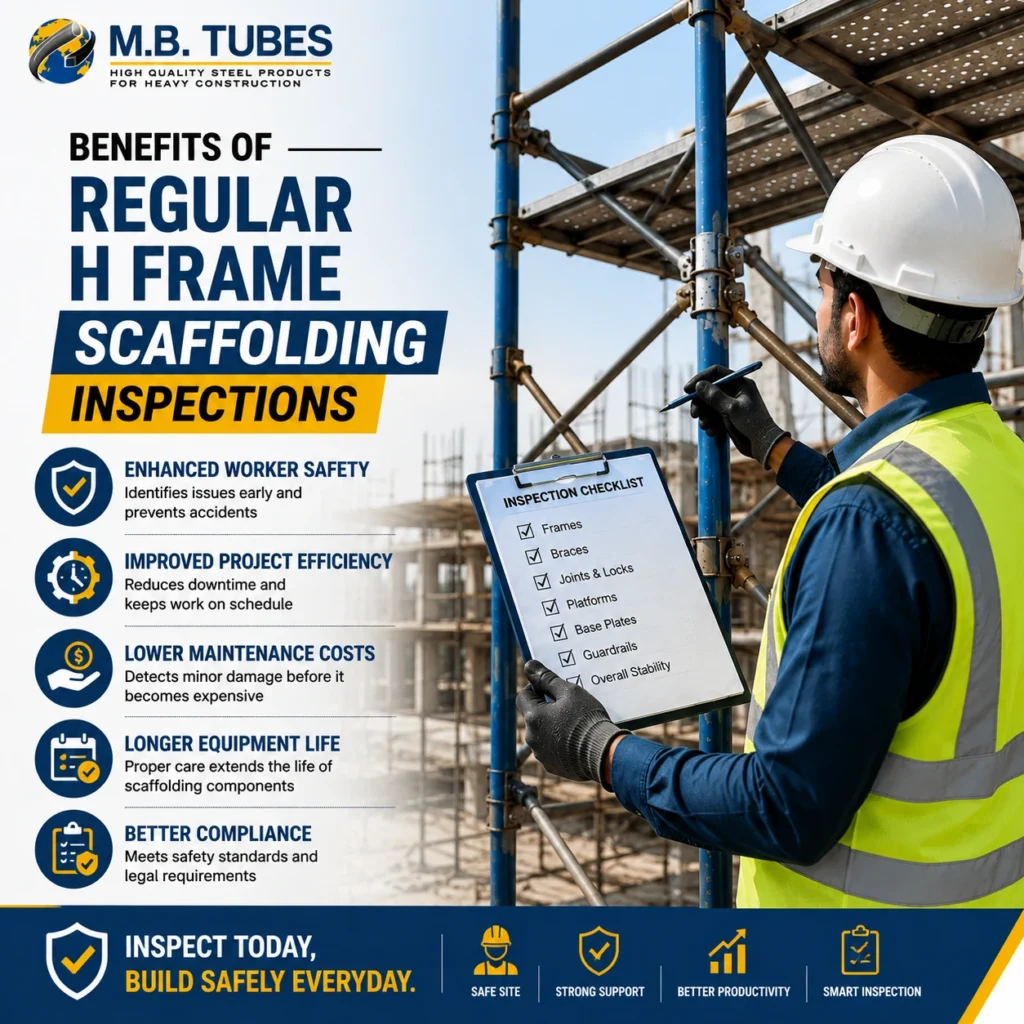
Benefits of Regular H Frame Scaffolding Inspections
Routine inspections offer long-term advantages:
Enhanced Worker Safety
Well-maintained scaffolding provides a secure working environment.
Improved Project Efficiency
Reliable equipment reduces interruptions and keeps projects on schedule.
Lower Maintenance Costs
Early detection of damage prevents expensive repairs and replacements.
Longer Equipment Life
Regular inspections extend the lifespan of scaffolding components.
Better Regulatory Compliance
Following inspection procedures helps meet construction safety standards.
Why Choose a Trusted H Frame Scaffolding Manufacturer in Madhya Pradesh?
The quality of scaffolding begins with the manufacturer.
A reliable H Frame Scaffolding Manufacturer in Madhya Pradesh offers:
- Premium-grade steel construction
- Precision manufacturing
- Strong welded joints
- High load-bearing capacity
- Durable surface finish
- Consistent product quality
- Timely delivery
- Technical support
Quality scaffolding provides a strong foundation for safer construction.
Frequently Asked Questions (FAQs)
1. Why should H Frame scaffolding be inspected before every use?
Daily inspections help identify damaged components, loose connections, and safety hazards before workers begin construction activities.
2. What is the most important part of scaffolding inspection?
Checking the frame, locking pins, cross braces, platforms, and foundation are the most important safety checks before use.
3. How often should H Frame scaffolding be inspected?
Scaffolding should be inspected before every shift, after severe weather, after modifications, and after relocation.
4. Can damaged scaffolding be repaired and reused?
Only approved repairs should be carried out. Severely damaged components should be replaced immediately to maintain safety.
5. Why choose a trusted H Frame Scaffolding Manufacturer in Madhya Pradesh?
A trusted H Frame Scaffolding Manufacturer in Madhya Pradesh provides durable, high-quality scaffolding systems designed for strength, safety, and long-term performance.