
What Is Box Culvert Shuttering? Uses, Components & Benefits
Box Culvert Shuttering plays an important role in building strong and accurately shaped concrete culverts for roads, highways, railways and drainage projects. It provides a temporary mould that holds fresh concrete in position until it develops sufficient strength. Understanding how box culvert shuttering works helps contractors select suitable formwork materials, plan construction activities and achieve consistent results in infrastructure projects.
Quick Answer: What Is Box Culvert Shuttering?
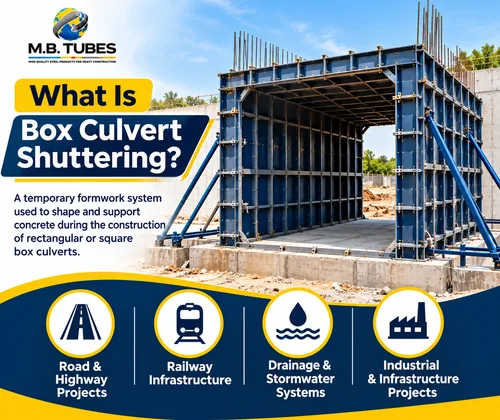
Box Culvert Shuttering is a temporary formwork system used to shape and support concrete during the construction of rectangular or square box culverts. It typically includes steel shuttering panels, internal and external supports, bracing and connecting accessories. The system maintains the required dimensions of the culvert walls and top slab while concrete is placed and gains strength.
What Is a Box Culvert?
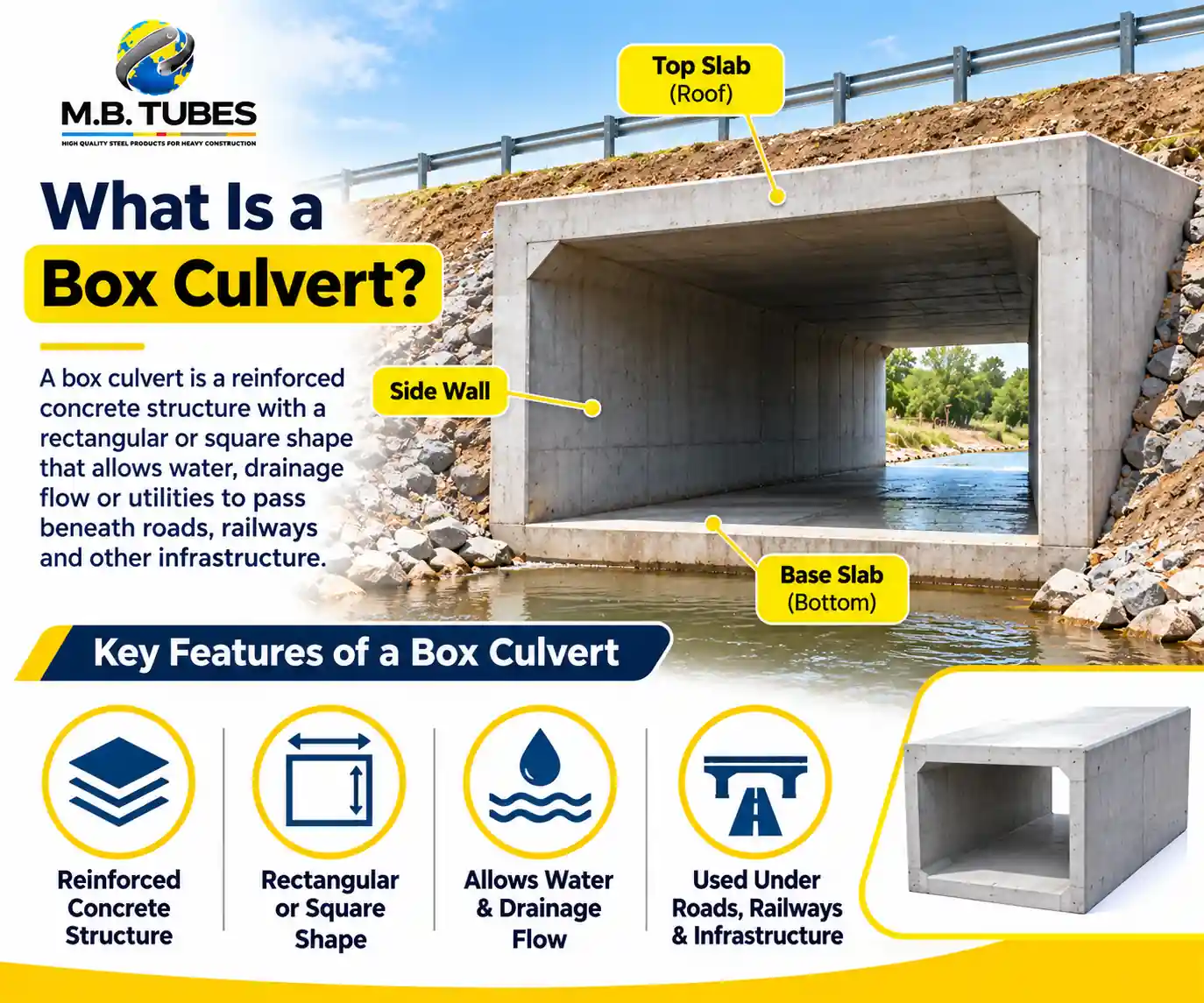
A box culvert is a reinforced concrete structure designed to allow water, drainage flow or, in some applications, utilities to pass beneath roads, railway tracks and other infrastructure.
Unlike circular drainage pipes, box culverts generally have a rectangular or square cross-section.
They commonly consist of four structural elements:
- Base Slab: Forms the bottom of the culvert.
- Side Walls: Provide vertical structural support.
- Top Slab: Forms the roof of the culvert.
- Reinforcement: Helps the concrete structure resist design loads.
Box culverts may have a single opening or multiple cells, depending on hydraulic and structural requirements.
Why Is Box Culvert Shuttering Important?
The purpose of Box Culvert Shuttering is not simply to hold concrete. It helps create the specified structural shape and supports an organized casting process.
1. Maintains Accurate Dimensions
Properly aligned shuttering helps maintain the required culvert width, height and wall thickness.
2. Supports Fresh Concrete
Concrete creates pressure against the formwork during placement. The shuttering system must be designed to resist these pressures and associated construction loads.
3. Improves Concrete Surface Finish
Clean, properly assembled panels can help produce more consistent concrete surfaces and reduce avoidable finishing work.
4. Supports Repetitive Construction
Reusable steel shuttering panels can be repositioned for repeated culvert sections, provided they remain suitable for further use.
Main Components of Box Culvert Shuttering
A complete Box Culvert Formwork System uses several interconnected components.
Component | Main Function |
Steel Shuttering Panels | Shape the concrete walls and slab surfaces |
Internal Formwork | Creates the culvert’s internal opening |
External Formwork | Forms the outside surfaces |
Adjustable Props | Provide temporary vertical support where specified |
Steel Bracing | Helps maintain stability and alignment |
Tie Rods and Wing Nuts | Connect and restrain opposing formwork faces |
Adjustable Spans | Provide horizontal support in compatible arrangements |
Connecting Accessories | Secure and align formwork components |
The actual components depend on the culvert design, construction method and approved formwork drawings.
How Does Box Culvert Shuttering Work?
Box Culvert Shuttering works by creating a temporary mould around the required concrete section. The formwork holds the concrete in its designed position during placement and initial strength development.
The process generally follows these stages.
Step 1: Review Structural Drawings
Before installation, contractors examine the culvert dimensions, reinforcement details, construction joints and required casting sequence.
Step 2: Prepare the Foundation
The construction area is prepared according to project requirements. Foundation levels, reinforcement and supporting surfaces are checked before formwork installation.
Step 3: Install Shuttering Panels
Steel panels are positioned to create the required concrete shape. Depending on the construction sequence, base, wall and top-slab formwork may be installed and cast in separate stages.
Step 4: Fix Supports and Bracing
Suitable props, ties, bracing and connecting accessories are installed to maintain the formwork arrangement and resist the expected loads.
Step 5: Check Alignment and Dimensions
The construction team verifies wall positions, internal opening dimensions, levels, joints and overall stability.
Step 6: Place and Compact Concrete
Concrete is placed according to the approved construction method. Proper placement and compaction help achieve the required concrete quality.
Step 7: Remove and Reuse Formwork
After the concrete has achieved the specified strength and stripping conditions, the formwork is carefully removed, cleaned, inspected and prepared for possible reuse.
Simple Process: Planning → Panel Installation → Bracing → Alignment Check → Concrete Placement → Strength Development → Formwork Removal.
Where Is Box Culvert Shuttering Used?
Box Culvert Shuttering is used in several infrastructure applications where rectangular concrete passages are required.
Road and Highway Construction
Box culverts allow drainage water to pass beneath roads and highways, helping maintain water flow across transportation routes.
Railway Infrastructure
Railway projects use appropriately designed culverts to provide drainage beneath tracks and embankments.
Stormwater Drainage Systems
Urban and industrial developments may require concrete box culverts to carry stormwater through designated drainage networks.
Industrial Infrastructure
Factories, warehouses and industrial facilities may use box culverts for site drainage and other engineered underground passages.
Irrigation and Water Management
Box culverts can form part of irrigation channels, drainage crossings and water-management infrastructure.
Benefits of Steel Box Culvert Shuttering
Steel formwork is often considered for projects involving repeated concrete sections.
Durability: Suitable steel panels can withstand repeated handling and construction use when maintained correctly.
Reusability: Panels may be reused across multiple casting cycles, reducing the need for entirely new formwork at every location.
Dimensional Consistency: Properly manufactured and assembled panels help maintain consistent structural dimensions.
Adaptability: Modular or customized arrangements can accommodate different culvert dimensions, subject to engineering design.
Construction Planning: Reusable components help contractors organize installation, stripping, handling and subsequent casting activities.
However, steel shuttering is not automatically the best option for every project. Its suitability depends on project size, geometry, handling requirements and expected reuse.

How to Choose the Right Box Culvert Shuttering?
Selecting Box Culvert Shuttering requires more than comparing panel prices.
Check Culvert Dimensions
Identify the internal width, height, wall thickness, top-slab thickness and total construction length.
Evaluate Construction Loads
The formwork must be designed for applicable fresh-concrete pressures, self-weight, construction loads and other relevant conditions.
Select Suitable Panel Specifications
Check panel dimensions, steel thickness, connections, surface condition and compatibility with the proposed arrangement.
Consider Reusability
For repetitive projects, evaluate the number of planned casting cycles and the maintenance required between uses.
Verify Supporting Components
Confirm that the specified props, ties, spans, bracing and accessories are compatible with the formwork design.
Plan Installation and Removal
Consider access, lifting arrangements, working space, concrete placement and safe dismantling procedures.
Important: Final formwork design and load verification should be carried out by qualified personnel using the project’s approved drawings and specifications.
Common Box Culvert Shuttering Mistakes to Avoid
Even good-quality formwork components may perform poorly when incorrectly selected or assembled.
Common mistakes include choosing panels without checking structural drawings, using incompatible accessories, providing inadequate bracing and failing to verify alignment before concrete placement.
Other problems include damaged panel surfaces, poorly sealed joints, unsuitable concrete placement sequences and premature removal of supports.
A practical approach is to inspect before installation, verify before pouring and check again before reuse.
Box Culvert Shuttering from Khambati Steel & M.B. Tubes
Khambati Steel & M.B. Tubes offers steel formwork and construction support products for infrastructure and concrete construction applications.
Its broader product range includes steel formwork, shuttering plates, adjustable steel props, adjustable spans, scaffolding components and construction accessories.
When planning a box culvert project, buyers should share their structural drawings, required dimensions, component specifications, quantities and delivery requirements.
This helps establish which available or customized components may suit the proposed construction arrangement.
Conclusion
Box Culvert Shuttering is an essential temporary construction system for producing accurately shaped reinforced concrete culverts. From highways and railways to industrial drainage projects, properly designed shuttering helps maintain dimensions, support fresh concrete and organize construction activities.
For projects involving repeated culvert sections, suitable steel shuttering panels and compatible supporting components can provide practical advantages in durability and reuse.
Planning a box culvert project? Contact Khambati Steel & M.B. Tubes with your construction drawings and material requirements to discuss suitable steel formwork and supporting components.
Frequently Asked Questions (FAQs)
What is the main purpose of Box Culvert Shuttering?
The main purpose of Box Culvert Shuttering is to create a temporary mould that shapes and supports concrete during box culvert construction. It helps maintain the specified dimensions and alignment of the concrete walls and slab until the concrete develops adequate strength.
Which material is commonly used for Box Culvert Shuttering?
Steel and timber-based formwork materials may be used depending on the project. Steel Box Culvert Shuttering is often considered for repetitive construction because suitable panels offer durability, dimensional consistency and the potential for multiple uses.
Can Box Culvert Shuttering be reused?
Yes. Steel shuttering components can often be reused after removal, cleaning and inspection. The number of reuse cycles depends on panel quality, handling, maintenance, deformation, corrosion and the requirements of the next construction section.
What is the difference between Box Culvert Shuttering and regular slab shuttering?
Box Culvert Shuttering forms a rectangular passage that typically includes vertical walls and a top slab. Regular slab shuttering primarily supports a horizontal concrete slab. Their support arrangements, pressure considerations and installation methods can therefore differ.
How do contractors choose the correct Box Culvert Shuttering system?
Contractors should review structural drawings, culvert dimensions, concrete pressures, panel specifications, support requirements and planned construction cycles. The final arrangement must be checked against the project’s engineering requirements before installation and concrete placement.