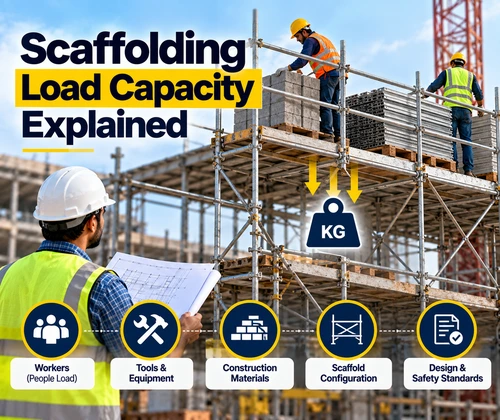

Scaffolding Load Capacity Explained: What Contractors and Buyers Need to Know
Scaffolding may look like a simple arrangement of steel pipes, platforms and supporting components, but every part of the system has an important job. One of the most important factors contractors, engineers and project buyers need to understand is Scaffolding Load Capacity.
In simple terms, scaffolding load capacity tells us how much load a particular scaffolding system is designed to handle under its specified configuration. However, understanding capacity is not simply about finding one number and applying it to every construction site.
The scaffold type, material, height, platform dimensions, components, connections, bracing and actual site configuration all matter.
At Khambati Steel & M.B. Tubes, scaffolding systems and components are manufactured for residential, commercial, industrial and infrastructure applications. The company’s listed MS Scaffolding specification includes a system load capacity of 1200 kg/m², along with a 48.3 mm pipe outer diameter and IS 1161 material specification. MB Tubes
This guide explains what scaffolding load capacity means, what affects it and what contractors should check before selecting scaffolding for a project.
What Is Scaffolding Load Capacity?
Scaffolding Load Capacity refers to the amount of load that a particular scaffold system is designed to support under defined conditions.
The load on a scaffold does not come from workers alone. During normal construction activities, the platform may also carry tools, equipment and construction materials.
Think about a typical site.
Two workers may be standing on one level while another area contains tools or materials required for masonry, plastering, painting or structural work. All of these create load on the scaffold structure.
This is why the complete working requirement should be considered when planning scaffolding.
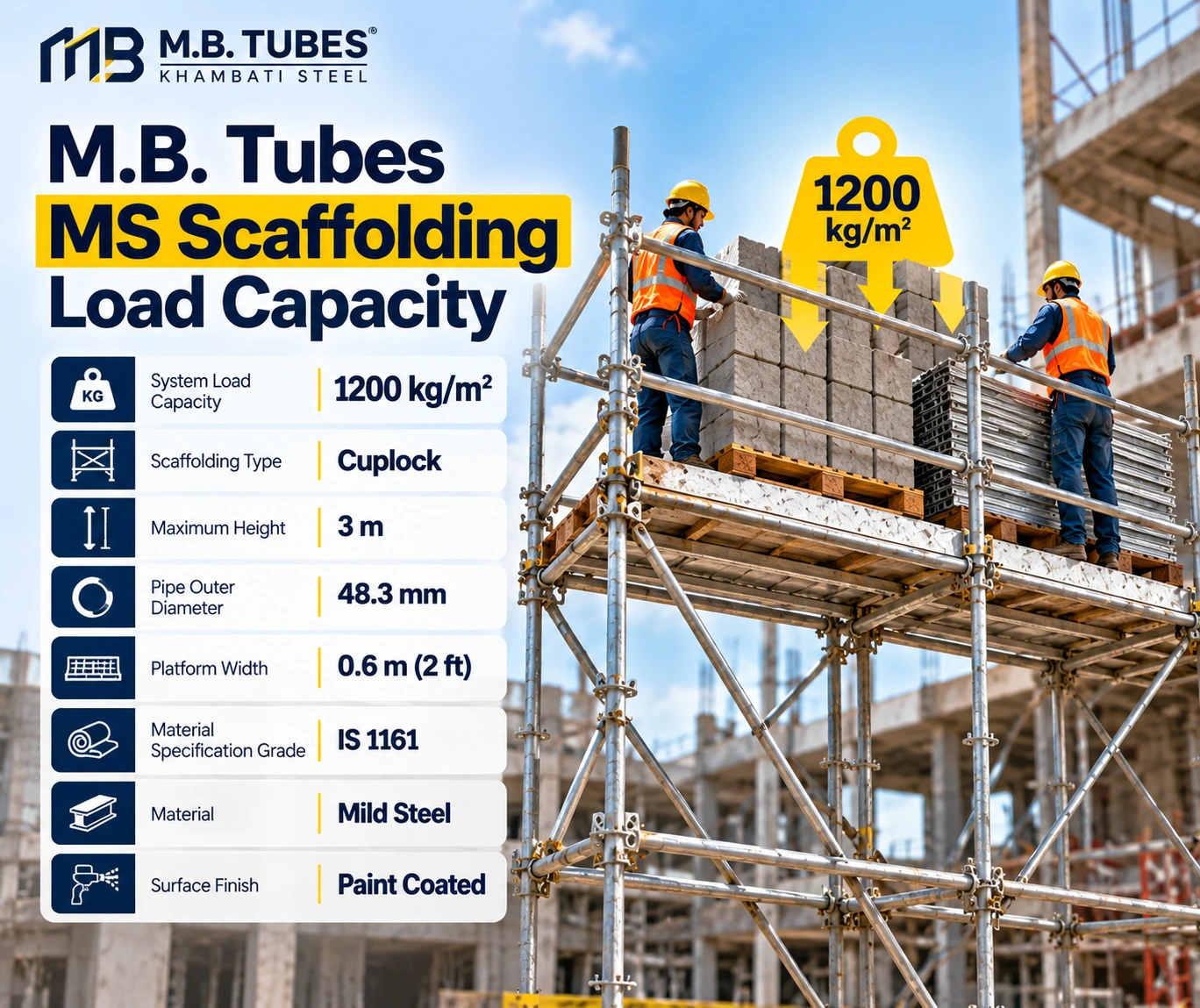
M.B. Tubes MS Scaffolding Load Capacity
For buyers looking specifically at M.B. Tubes products, the company’s MS Scaffolding page provides useful technical specifications.
Specification | M.B. Tubes MS Scaffolding |
Scaffolding Type | Cuplock |
System Load Capacity | 1200 kg/m² |
Maximum Height | 3 m |
Pipe Outer Diameter | 48.3 mm |
Platform Width | 0.6 m (2 ft) |
Material Specification Grade | IS 1161 |
Material | Mild Steel |
Surface Finish | Paint Coated |
These are the specifications currently listed for the particular MS Scaffolding product on the M.B. Tubes website. MB Tubes
A key point for buyers is that this specification should not automatically be treated as the rating of every scaffolding product or every possible site configuration. M.B. Tubes offers several scaffolding systems and components, so requirements should be matched with the specific product and intended project application. MB Tubes
What Factors Affect Scaffolding Load Capacity?
Understanding the rated capacity is only the beginning. The actual scaffold arrangement matters as well.
1. Scaffolding System
Different construction applications can require different systems.
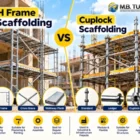
M.B. Tubes’ product range includes Cuplock Scaffolding, H-Frame Scaffolding, Scaffolding Towers, Props, Scaffolding Pipes & Tubes, Walkway Planks and related accessories. MB Tubes
A Cuplock system used for one application should not automatically be compared with a prop or another support system using only one load figure.
2. Workers on the Platform
Workers form part of the working load.
The project team should consider how many people are expected to work on a particular scaffold level rather than planning only around an empty structure.
This becomes particularly important when several workers, tools and materials are present on the same working platform.
3. Tools and Construction Materials
A scaffold used for inspection or painting can have very different loading requirements from one being used for masonry or structural construction.
Blocks, tools and other construction materials can add considerable load.
Therefore, buyers should explain the actual application when discussing their scaffolding requirement instead of purchasing solely according to scaffold height or price.
4. Load Distribution
Imagine placing construction material evenly across an approved working area versus stacking the same material in one small section.
The total weight may be similar, but the loading condition is different.
This is why Scaffolding Load Capacity should not be interpreted simply as permission to place material anywhere on a scaffold.
The intended system configuration and appropriate material distribution need to be considered together.
5. Scaffolding Components
A scaffold is a complete system rather than a collection of independent pipes.
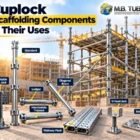
M.B. Tubes offers components and accessories including couplers, joint pins, base jacks, fixed base plates, adjustable stirrup heads, scaffolding boards, props and other fittings for scaffolding and formwork applications. MB Tubes
These components help with connection, adjustment, support and stabilization of the structure.
Correct component selection is therefore an important part of creating a dependable scaffolding arrangement.
Understanding the Scaffold Load Path
One useful way to understand scaffolding capacity is to follow how the load moves through the structure.
Workers & Materials → Working Platform → Horizontal Members → Vertical Members → Base Components → Supporting Surface
The load does not disappear when it reaches the platform.
It needs to travel through the complete scaffold arrangement before finally reaching the supporting surface.
This explains why looking at only one component does not provide a complete picture of scaffold performance.
Scaffolding Load Capacity vs Actual Working Load
These two terms should not be confused.
Load capacity describes what a specified system is designed to handle under its defined conditions.
Working load is what you actually intend to place on it during construction.
For example, suppose a working area will carry:
- Workers
- Hand tools
- Construction material
- Equipment needed for the activity
Adding these items helps identify the expected working requirement.
But calculating the expected weight does not automatically confirm that a scaffold configuration is suitable for it.
The selected system still needs to match the project requirement and its applicable technical specification.
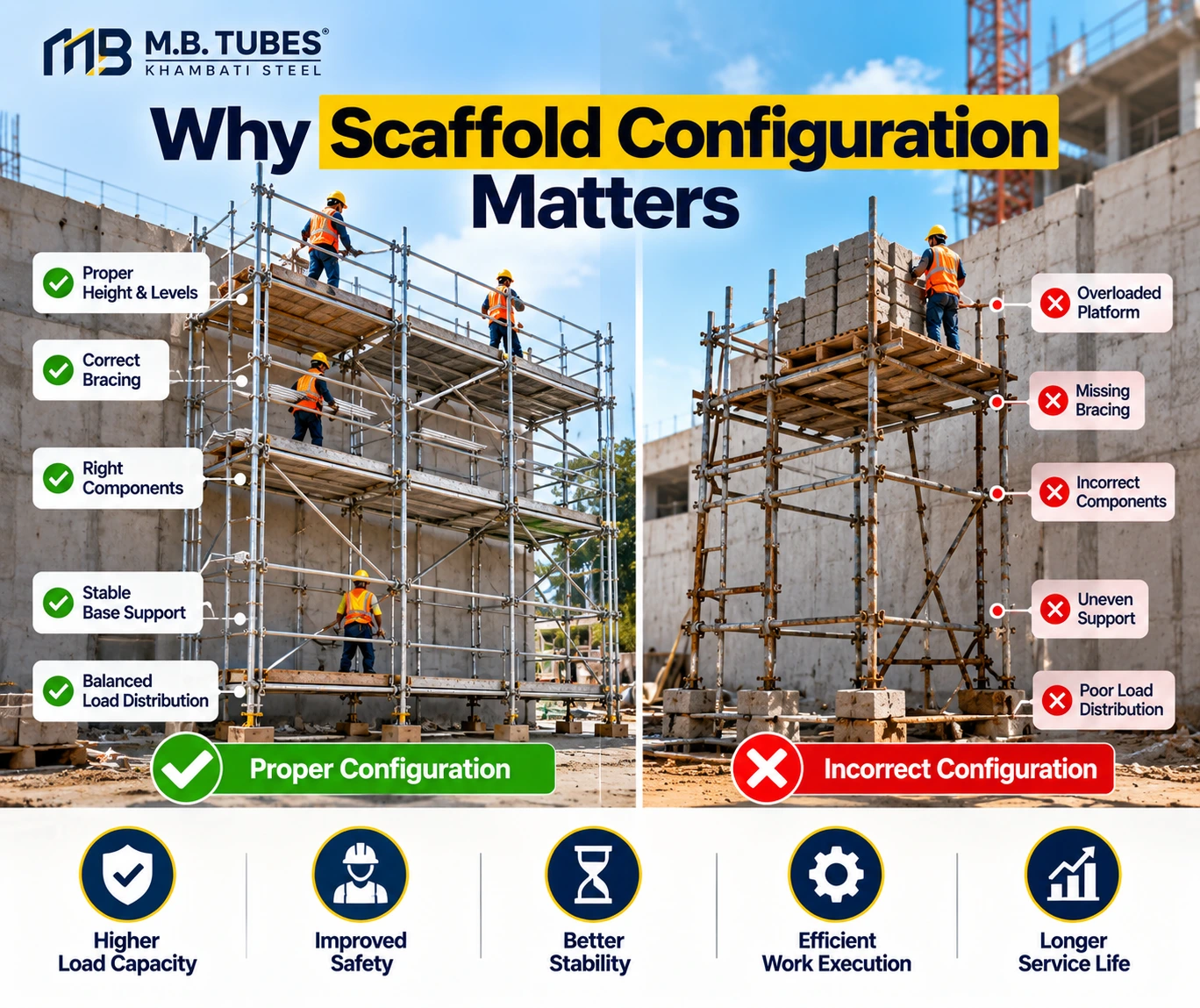
Why Scaffold Configuration Matters
Two scaffolds made using similar-looking steel components can behave differently when their configurations change.
Height, working levels, platform arrangement, support components and connections can all vary from project to project.
This becomes especially important on industrial plants, infrastructure developments, commercial buildings and other projects where scaffold arrangements can become more complex.
Instead of asking only:
“How much weight can scaffolding hold?”
A better question is:
“What scaffolding system and configuration is suitable for the load and application of my project?”
That question gives contractors and suppliers much more useful information to work with.
Do Props Have the Same Load Capacity as Scaffolding?
No. Different products on the M.B. Tubes website have their own specifications.
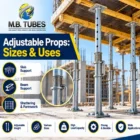
For example, the company’s Adjustable Prop Jack product page lists a 60 kN load capacity, while another Adjustable Steel Prop page lists 50 kN for its specified heavy-duty prop configuration. These products are intended for temporary structural support applications such as slabs, beams, shuttering and formwork. MB Tubes
This demonstrates an important purchasing principle:
Never transfer the capacity figure of one scaffolding or support product to another product.
Always check the specification of the product you are actually planning to use.
Lorem ipsum dolor sit amet, consectetur adipiscing elit. Ut elit tellus, luctus nec ullamcorper mattis, pulvinar dapibus leo.
Frequently Asked Questions
What is Scaffolding Load Capacity?
Scaffolding Load Capacity refers to the load a specified scaffold system is designed to support under its defined configuration and conditions. Workers, tools, materials and the overall scaffold arrangement should all be considered when planning a system for a construction project.
What is the load capacity of M.B. Tubes MS Scaffolding?
The M.B. Tubes MS Scaffolding product page currently lists a system load capacity of 1200 kg/m² for its specified Cuplock MS Scaffolding product. The same listing gives a maximum height of 3 m, 48.3 mm pipe outer diameter and IS 1161 material specification. MB Tubes
Does every M.B. Tubes scaffold have a 1200 kg/m² capacity?
The 1200 kg/m² figure is listed for the specific MS Scaffolding product described on the website. M.B. Tubes offers multiple scaffolding, formwork and support products with different specifications, so buyers should check the relevant product data rather than applying one figure to the entire range. MB Tubes
What factors should be considered when selecting scaffolding?
Consider the intended application, scaffold system, height, working levels, platform arrangement, expected workers, construction materials, components and project specifications. For larger or specialised applications, project-specific technical requirements become particularly important.
What scaffolding products does M.B. Tubes offer?
The company’s range includes Cuplock Scaffolding, H-Frame Scaffolding, Scaffolding Pipes & Tubes, Scaffolding Towers, Walkway Planks, Shuttering Plates, Adjustable Jacks, Props and multiple scaffolding accessories. MB Tubes