
What Is a Heavy Structural Pipe Used For? Applications, Benefits & Selection Guide
Heavy Structural Pipes play an important role in modern construction, industrial development and steel fabrication. From large industrial sheds to supporting frameworks and heavy-duty infrastructure, these pipes are used where structural stability, strength and durability matter.
However, choosing a heavy structural pipe is not simply about selecting the thickest or heaviest steel pipe. The right choice depends on the load requirements, pipe diameter, wall thickness, steel grade and structural design.
This guide explains what heavy structural pipes are, where they are used, their key benefits and how to select the right specifications for a project.
What Is a Heavy Structural Pipe?
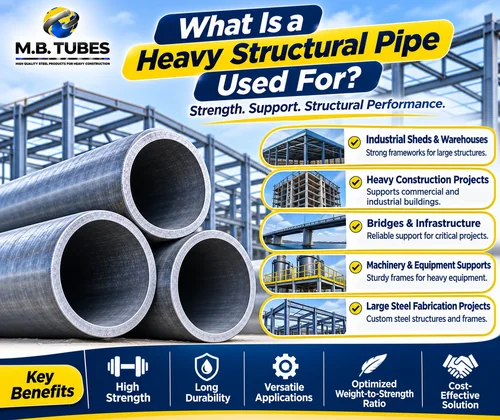
A Heavy Structural Pipe is a steel pipe designed or specified for demanding structural applications. It is commonly used in frameworks, columns, supports and other construction components where pipes must withstand significant loads.
Heavy structural pipes are generally selected based on their dimensions, material properties and required structural performance.
Important specifications include:
- Outside Diameter (OD): The external diameter of the pipe.
- Wall Thickness: The thickness of the steel surrounding the hollow centre.
- Steel Grade: The material’s specified mechanical properties.
- Pipe Length: The required length for construction or fabrication.
- Surface Finish: The protective finish selected for the operating environment.
Unlike pipes chosen primarily for transporting fluids, structural pipes are selected for their ability to perform as part of a designed supporting framework.
Where Are Heavy Structural Pipes Used?
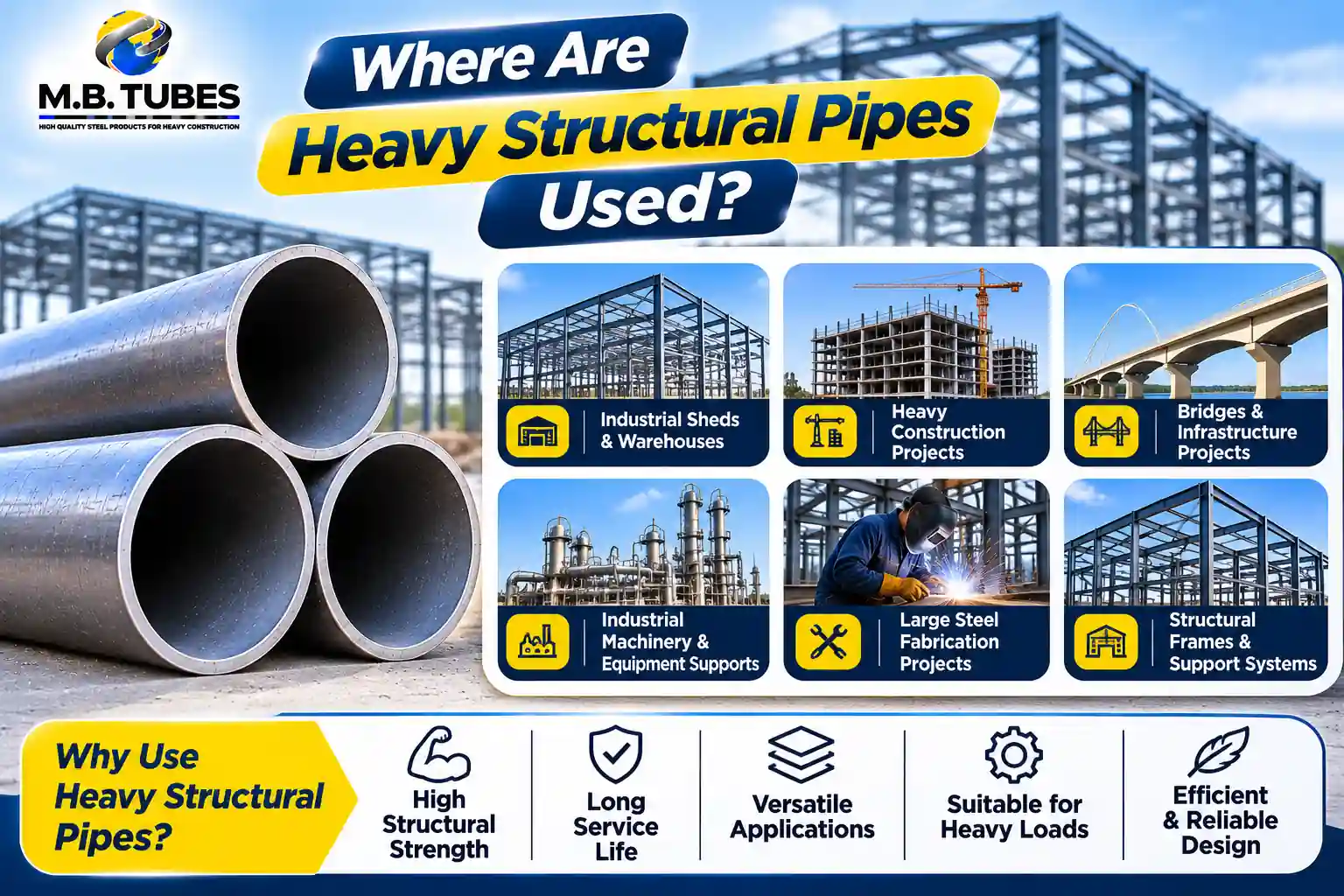
Heavy structural pipes are used across several industries. Their applications depend on the required structural design and the specifications of the pipe.
1. Industrial Sheds and Warehouses
Industrial sheds require strong structural frameworks to support roofing systems, equipment and other building components.
Heavy structural pipes may be used for:
- Structural columns and supports
- Roof-supporting frameworks
- Industrial shed structures
- Warehouse steel frameworks
- Supporting members for engineered structures
Why are they useful? Their hollow steel profile can provide an efficient combination of structural performance and material weight when properly designed.
2. Heavy Construction Projects
Large construction projects often require steel members that can withstand demanding loads and site conditions.
Heavy structural pipes can be used in engineered supporting frameworks for commercial buildings, industrial facilities and infrastructure.
Their suitability depends on the load path, member length, connections and overall structural design.
3. Bridges and Infrastructure Projects
Infrastructure projects may use structural steel pipes in selected supporting components, temporary works and engineered structural assemblies.
Applications can include:
- Structural supporting members
- Temporary construction supports
- Engineered steel frameworks
- Infrastructure fabrication
- Special-purpose structural components
For bridge-related applications, the pipe must meet the relevant engineering specifications. Not every heavy structural pipe is suitable for every bridge component.
4. Industrial Machinery and Equipment Supports
Factories often require steel frameworks for supporting equipment and machinery.
Heavy structural pipes may be used to fabricate:
- Equipment-supporting frames
- Industrial machinery structures
- Maintenance platforms
- Structural equipment stands
- Custom steel support assemblies
In these applications, designers must consider both static loads and dynamic effects, including vibration where relevant.
5. Large Steel Fabrication Projects
Heavy structural pipes are also used by fabrication companies manufacturing customized industrial and construction components.
Their applications include heavy-duty frames, support structures, engineered assemblies and other steel fabrication work.
The ability to cut, weld and connect suitable steel pipe grades makes them practical for many fabrication requirements.
Why Are Heavy Structural Pipes Important?
The value of a heavy structural pipe comes from selecting a suitable steel section for a particular structural application.
Structural Strength
Properly specified structural pipes can resist different combinations of axial forces, bending and other design actions.
Their actual capacity depends on more than wall thickness alone.
Durability
Steel pipes can provide long service life when the correct material, protective finish, installation and maintenance practices are used.
Versatile Applications
Heavy structural pipes can be incorporated into industrial buildings, fabrication projects, supporting frameworks and infrastructure components.
Efficient Structural Design
Hollow steel sections can offer useful structural properties relative to their weight, depending on their geometry and loading conditions.
Fabrication Flexibility
Suitable steel grades can be cut, welded and assembled into customized frameworks according to project drawings.
Heavy Structural Pipe vs Regular MS Pipe: What Is the Difference?
Both products may be manufactured using mild steel, but their intended applications and specifications can differ.
Factor | Heavy Structural Pipe | Regular MS Pipe |
Primary application | Demanding structural work | General fabrication and other specified uses |
Wall thickness | Selected for structural requirements | Varies by product and application |
Pipe diameter | May include larger sizes | Available in different sizes |
Load requirements | Determined by structural design | Depends on intended application |
Steel grade | Must meet project specifications | Depends on product specification |
Common uses | Heavy frameworks and supports | General construction and fabrication |
Important: A pipe described as heavy-duty is not automatically stronger than every regular MS pipe. Performance must be evaluated using the actual dimensions, material grade and engineering requirements.
How Does Wall Thickness Affect Heavy Structural Pipe Strength?
Wall thickness is one of the most important specifications when selecting structural steel pipes.
For pipes with the same outside diameter and steel grade, increasing wall thickness generally increases the amount of steel in the cross-section.
This can improve certain structural properties, but it also increases pipe weight and material cost.
For example, consider two pipes with the same outside diameter:
- Pipe A: 114.3 mm OD × 4 mm wall thickness
- Pipe B: 114.3 mm OD × 6 mm wall thickness
Pipe B contains more steel per metre and generally has greater cross-sectional area. However, the actual structural capacity of either pipe depends on its application, unsupported length, connections and loading.
Key takeaway: Select wall thickness based on engineering calculations, not appearance or weight alone.
How to Choose the Right Heavy Structural Pipe
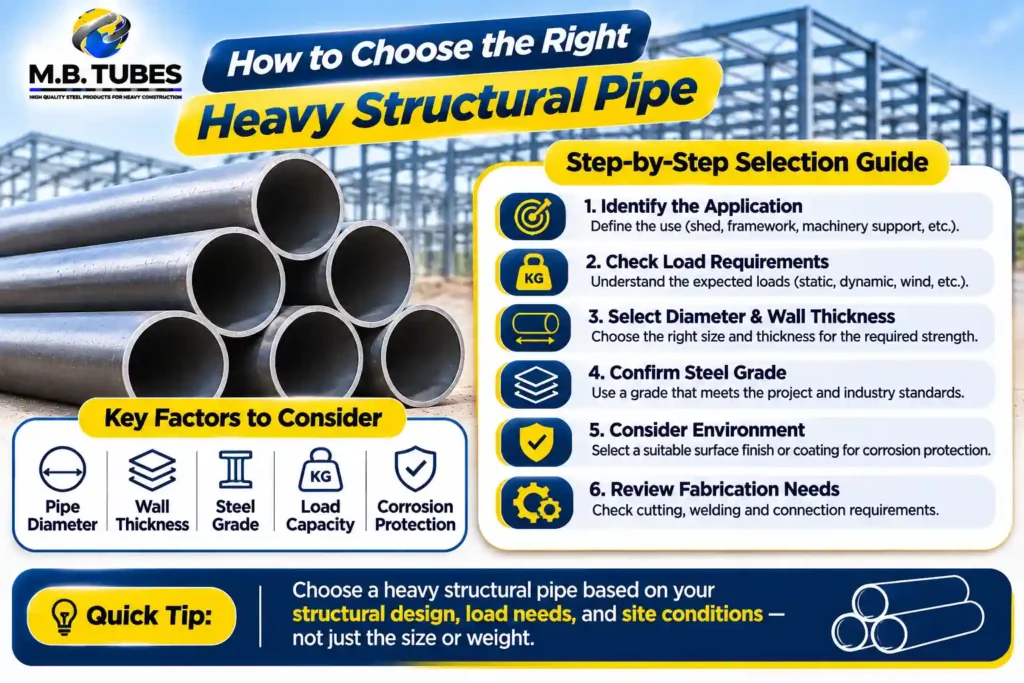
Selecting the correct pipe begins with understanding the project rather than comparing prices.
Step 1: Identify the Application
Determine whether the pipe will be used for a column, structural frame, equipment support or another purpose.
Step 2: Confirm Load Requirements
Understand the loads the pipe must resist, including applicable permanent, imposed, wind and other design loads.
Step 3: Select Diameter and Wall Thickness
The outside diameter and wall thickness affect cross-sectional properties, stiffness and weight.
Step 4: Check Steel Grade and Standards
Confirm that the specified material properties and manufacturing requirements match the project drawings and applicable standards.
Step 5: Consider Environmental Conditions
Outdoor and industrial environments may require protective coatings or other corrosion-control measures.
Step 6: Verify Fabrication Requirements
Check the required cutting, welding, connection details, dimensions and tolerances before placing an order.
Step 7: Confirm Quantity and Delivery
Calculate the total pipe length, number of pieces and approximate material weight to support procurement and transportation planning.
Does a Heavier Structural Pipe Always Mean Better Strength?
No. A heavier structural pipe is not automatically the best or strongest option for every application.
Structural performance depends on several connected factors:
- Pipe geometry: Diameter and wall thickness influence section properties.
- Steel grade: Material strength affects resistance to different loads.
- Member length: Long unsupported members may be more vulnerable to buckling.
- Loading direction: Axial loads, bending and combined loading create different demands.
- Support conditions: Connections and restraints influence structural behaviour.
For example, a larger-diameter pipe with a suitable wall thickness may perform better in certain bending applications than a smaller, heavier pipe.
The correct choice should be established through structural design rather than a simple comparison of total weight.
Common Mistakes to Avoid When Buying Heavy Structural Pipes
Some procurement mistakes can lead to unnecessary costs, fabrication difficulties or unsuitable materials.
Choosing only by weight: A heavier pipe does not guarantee better performance.
Ignoring steel grade: Pipes with similar dimensions may have different mechanical properties.
Selecting thickness without design calculations: Wall thickness must suit the intended loads and structural configuration.
Overlooking corrosion protection: The working environment can affect the required surface finish.
Not checking dimensions and tolerances: Incorrect sizes can create problems during fabrication and assembly.
Comparing quotations without matching specifications: Always compare pipes with equivalent dimensions, grades, lengths and other requirements.
Heavy Structural Pipes from Khambati Steel & M.B. Tubes
Khambati Steel & M.B. Tubes offers steel pipes and tubes for construction, fabrication and industrial applications.
Its broader product range includes MS ERW pipes, round steel tubes, square and rectangular hollow sections, and structural steel solutions.
For heavy structural pipe requirements, buyers should share their project drawings, required diameter, wall thickness, material grade, quantity and delivery requirements.
Providing complete specifications helps suppliers identify suitable products and prepare more accurate quotations.
Conclusion
Heavy Structural Pipes are important components in industrial construction, supporting frameworks, fabrication and infrastructure projects.
Their usefulness comes from the right combination of pipe dimensions, wall thickness, steel grade, structural design and installation requirements.
Rather than selecting the biggest or heaviest pipe, focus on choosing the specification that meets your project’s performance and safety requirements.
For construction and industrial steel requirements, Khambati Steel & M.B. Tubes can be considered for suitable steel pipe and tube solutions based on your project specifications.
SEO focus keyword: Heavy Structural Pipe | Supporting keywords: Heavy Structural Pipes, Structural Steel Pipes, Heavy Duty Steel Pipes, MS Structural Pipes, Structural Pipe Applications.
Frequently Asked Questions (FAQs)
What is a heavy structural pipe mainly used for?
Heavy structural pipes are mainly used in industrial frameworks, supporting structures, equipment frames, large fabrication projects and selected infrastructure applications. Their suitability depends on the required structural design and material specifications.
Are heavy structural pipes suitable for industrial sheds?
Yes. Properly specified structural steel pipes can be used in industrial shed frameworks, columns and other supporting members. The dimensions, material grade and connections must be selected according to the building’s structural design.
Does greater wall thickness make a structural pipe stronger?
For otherwise identical pipes, greater wall thickness generally increases cross-sectional area and certain strength properties. However, actual load capacity also depends on member length, steel grade, loading conditions, connections and structural stability.
What is the difference between heavy structural pipes and MS ERW pipes?
MS ERW describes a manufacturing method using electric resistance welding. Heavy structural pipe describes an intended structural application or duty level. An MS ERW pipe may also serve as a heavy structural pipe if it meets the required specifications.
How do I select the correct heavy structural pipe size?
Start with the structural drawings and engineering requirements. Confirm the outside diameter, wall thickness, steel grade, member length, surface protection and applicable standards before finalizing the pipe specification.