
Roofing Sheet Thickness Guide: Choose the Right Strength
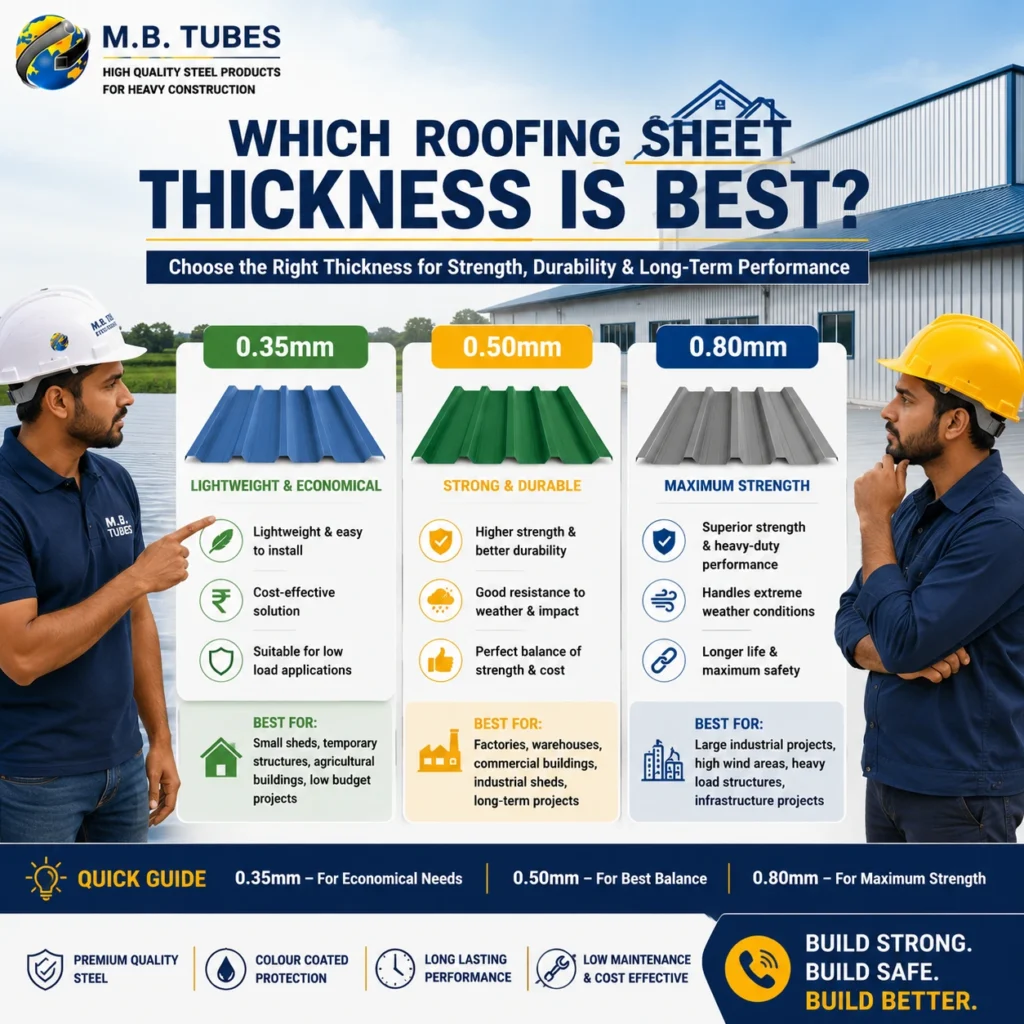
Selecting the right roofing sheet thickness is one of the most important decisions for any industrial, commercial, or residential construction project. The thickness of a roofing sheet directly affects its strength, durability, load-bearing capacity, weather resistance, and lifespan.
Many buyers compare only the price of roofing sheets but ignore an important factor — thickness. A sheet that looks similar in appearance can perform very differently depending on whether it is 0.35mm, 0.50mm, or 0.80mm thick.
A premium Colour Coated Profile Sheet with the correct thickness provides better protection against heavy rain, strong winds, corrosion, and long-term wear.
Why Roofing Sheet Thickness Matters
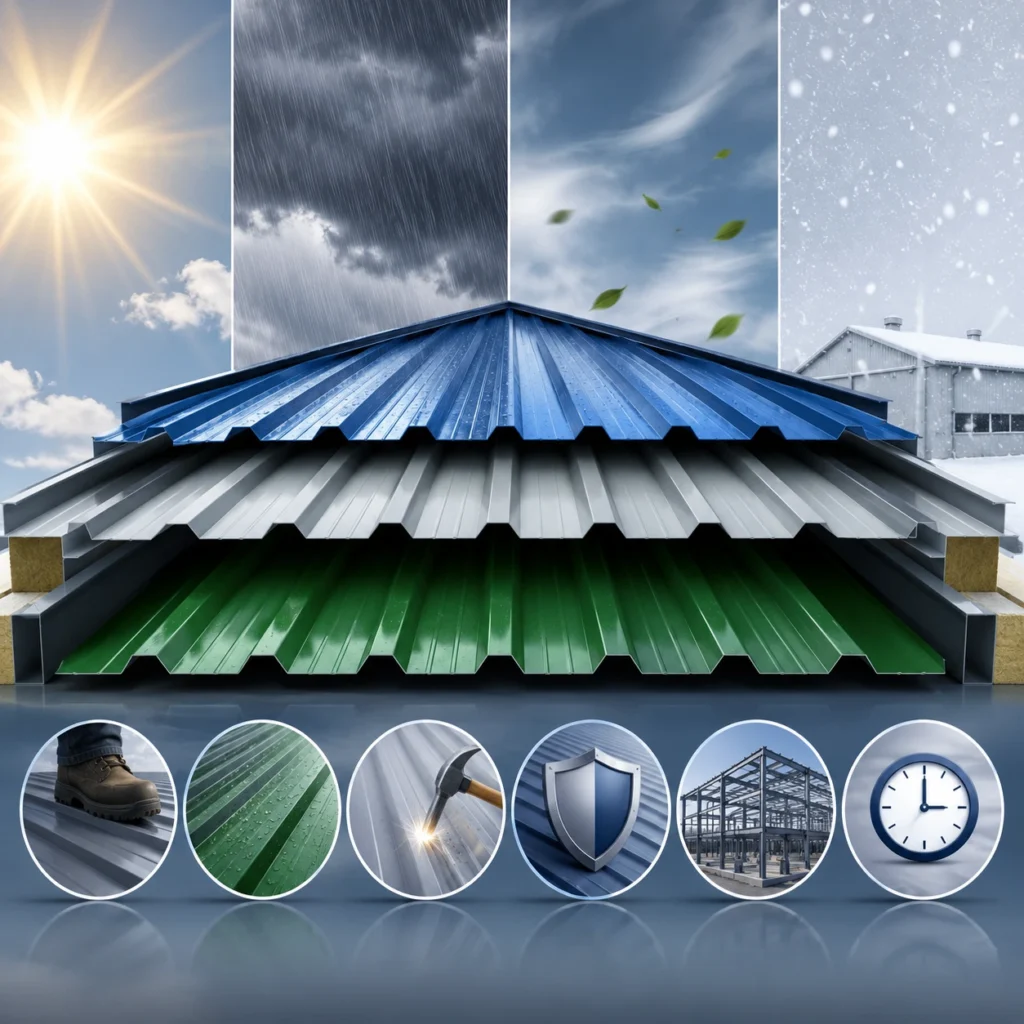
Roofing sheets are exposed to challenging environmental conditions every day. The right thickness ensures:
- Better structural strength
- Higher impact resistance
- Longer service life
- Improved weather protection
- Reduced maintenance requirements
- Better performance under heavy loads
Choosing the wrong thickness may result in bending, leakage issues, frequent repairs, and reduced roof life.
Understanding Roofing Sheet Thickness
Roofing sheet thickness is measured in millimetres (mm).
Common industrial roofing thickness options include:
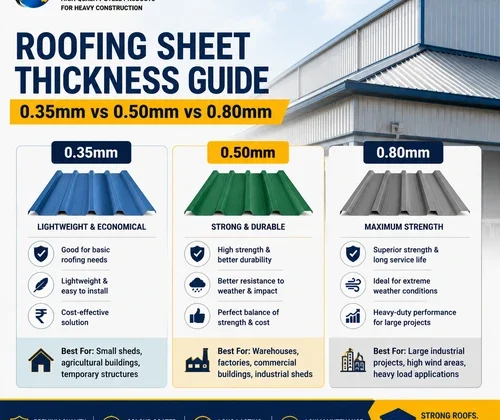
- 0.35mm Roofing Sheet
- 0.50mm Roofing Sheet
- 0.80mm Roofing Sheet
Each thickness is suitable for different applications depending on project requirements.
0.35mm Roofing Sheet: Lightweight Choice
A 0.35mm roofing sheet is commonly used for projects where lightweight roofing is required.
Advantages
✔ Cost-effective solution
✔ Easy installation
✔ Lightweight structure
✔ Suitable for small applications
✔ Requires less structural support
Best Applications
- Small warehouses
- Temporary structures
- Residential sheds
- Agricultural buildings
- Low-budget projects
Limitations
Compared to thicker sheets, 0.35mm sheets have lower resistance against heavy impact, strong winds, and long-term industrial usage.
For large factories and heavy-duty applications, higher thickness is usually preferred.
0.50mm Roofing Sheet: Balanced Performance
The 0.50mm roofing sheet is one of the most popular choices for industrial and commercial buildings.
It provides the perfect balance between:
- Strength
- Durability
- Cost
- Performance
Advantages
✔ Better load-bearing capacity
✔ Higher durability than 0.35mm sheets
✔ Improved resistance against weather conditions
✔ Suitable for long-term applications
✔ Excellent value for money
Best Applications
- Industrial sheds
- Factories
- Warehouses
- Commercial buildings
- Manufacturing units
- Infrastructure projects
A high-quality Colour Coated Profile Sheet in 0.50mm thickness is widely preferred because it offers reliable performance without increasing unnecessary project costs.
0.80mm Roofing Sheet: Maximum Strength
A 0.80mm roofing sheet is designed for heavy-duty applications where maximum strength and durability are required.
Advantages
✔ Superior structural strength
✔ Excellent impact resistance
✔ Handles heavy weather conditions
✔ Longer service life
✔ Suitable for demanding environments
Best Applications
- Large industrial plants
- Heavy engineering buildings
- Power projects
- High-wind areas
- Large warehouses
- Infrastructure projects
Although the initial investment is higher, the long-term durability makes it suitable for critical applications.
0.35mm vs 0.50mm vs 0.80mm Roofing Sheet Comparison
| Feature | 0.35mm | 0.50mm | 0.80mm |
| Strength | Basic | High | Very High |
| Durability | Moderate | Excellent | Premium |
| Cost | Low | Medium | High |
| Weight | Lightweight | Balanced | Heavy Duty |
| Maintenance | Higher | Low | Very Low |
| Best For | Small Structures | Industrial & Commercial Use | Heavy Projects |
Which Roofing Sheet Thickness is Best?
The ideal thickness depends on your project requirements.
Choose 0.35mm If:
- You need an economical solution
- The structure has low load requirements
- The application is temporary or small-scale
Choose 0.50mm If:
- You need the best balance of cost and performance
- You are constructing factories, warehouses, or commercial buildings
- Long-term durability is important
Choose 0.80mm If:
- Your project requires maximum strength
- The location experiences extreme weather conditions
- Heavy-duty performance is required
For most industrial applications, a 0.50mm Colour Coated Profile Sheet provides excellent performance and durability.
Benefits of Colour Coated Profile Sheet
Modern construction projects increasingly prefer Colour Coated Profile Sheet because it combines strength with aesthetic appeal.
Superior Corrosion Protection
The protective coating helps prevent rust and extends roof life.
Attractive Appearance
Available in multiple colors to improve building aesthetics.
Low Maintenance
Requires minimal maintenance compared to traditional roofing materials.
Weather Resistance
Designed to withstand rain, sunlight, and changing weather conditions.
Faster Installation
Lightweight design allows quicker installation and reduces construction time.
Factors to Consider Before Buying Roofing Sheets
Before selecting roofing sheet thickness, consider:
Project Type
Factory, warehouse, residential, or infrastructure projects have different requirements.
Location Weather
Areas with heavy rainfall, strong winds, or extreme temperatures require stronger sheets.
Structural Design
The supporting structure and spacing also affect thickness selection.
Expected Lifespan
For long-term investment, thicker sheets provide better durability.
Manufacturer Quality
Always choose roofing sheets from a trusted manufacturer to ensure consistent quality.
Why Choose M.B. Tubes for Colour Coated Profile Sheet?
M.B. Tubes provides premium roofing solutions designed for industrial and commercial requirements.
High-Quality Materials
Manufactured using quality steel for strength and durability.
Wide Thickness Options
Solutions available according to project requirements.
Reliable Performance
Products designed for long-term protection and efficiency.
Industrial Applications
Suitable for:
- Factories
- Warehouses
- Industrial sheds
- Commercial buildings
- Infrastructure projects
Expert Support
Professional guidance helps customers select the right roofing solution.
Conclusion
Choosing the correct roofing sheet thickness plays a major role in the safety, durability, and performance of your building. While 0.35mm roofing sheets are suitable for lightweight applications, 0.50mm sheets provide the ideal balance for most industrial projects, and 0.80mm sheets deliver maximum strength for heavy-duty requirements.
A premium Colour Coated Profile Sheet with the right thickness ensures better protection, lower maintenance, and a longer-lasting roofing solution.
Before making your decision, always consider your project requirements, environmental conditions, and manufacturer reliability to achieve the best results.
FAQs
1. Which roofing sheet thickness is best for factories?
For most factories, 0.50mm Colour Coated Profile Sheet is preferred because it provides excellent strength, durability, and cost efficiency.
2. Is 0.35mm roofing sheet suitable for industrial buildings?
It can be used for small structures, but heavy industrial buildings generally require thicker sheets.
3. Is a thicker roofing sheet always better?
A thicker sheet provides more strength, but the ideal choice depends on project requirements and structural design.
4. How long does a Colour Coated Profile Sheet last?
With proper quality and installation, premium colour coated roofing sheets can provide long-lasting performance for many years.