
Which Scaffolding Coupler Should You Use? The Ultimate Guide for Construction Safety and Stability
When building temporary support structures, high-rise building facades, or industrial staging platforms, safety and structural integrity are paramount. At the heart of every sturdy tube-and-coupler scaffolding system lies an unsung hero: the scaffolding coupler.
Choosing the right scaffolding coupler isn’t just about connecting two steel pipes together—it’s about load capacities, alignment angles, safety standards, and project efficiency. Using the wrong fitting can lead to structural slippage, scaffolding failure, or costly site delays.
So, which scaffolding coupler should you use for your project?
In this comprehensive guide, we will break down the different types of scaffolding couplers, their specific load capacities, key industry standards, and how to select the perfect fitting for your construction needs.
What is a Scaffolding Coupler?
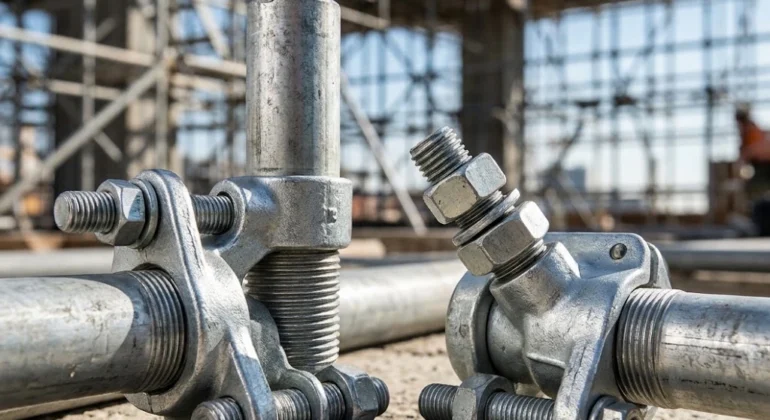
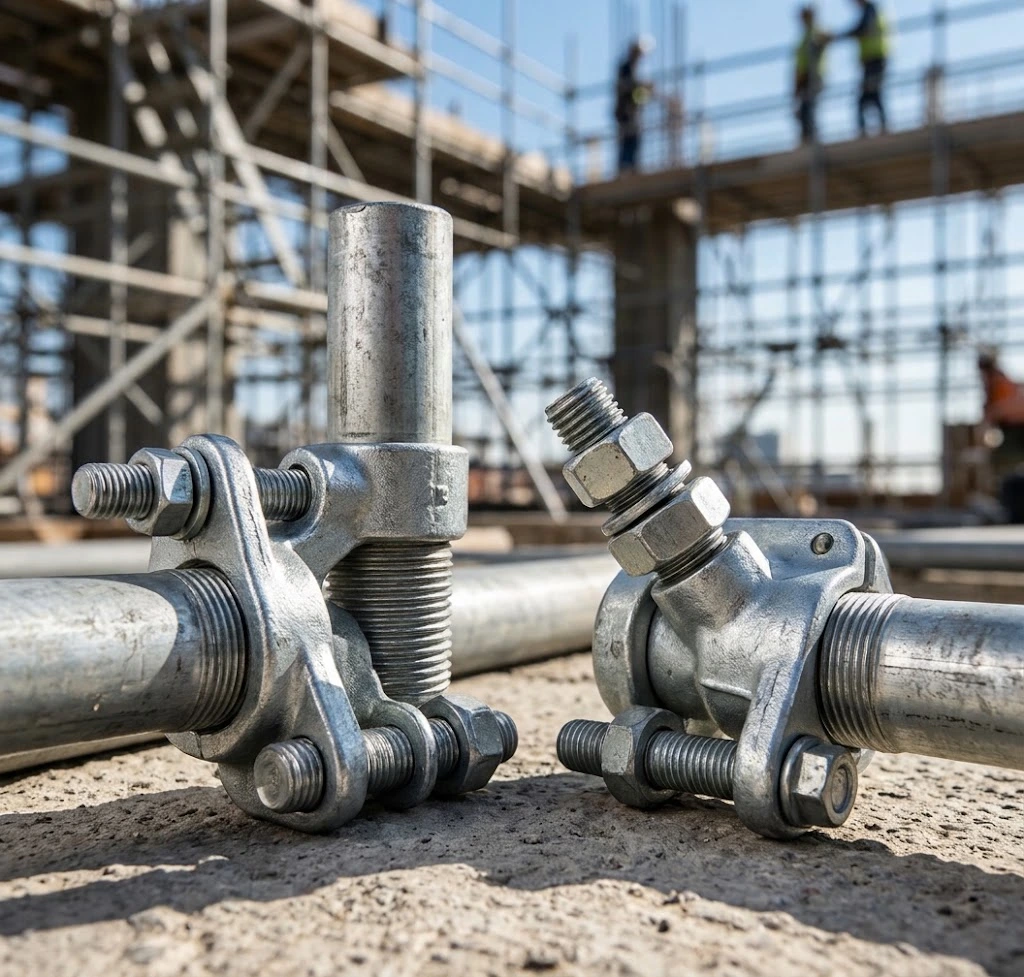
A scaffolding coupler (also known as a scaffolding clamp or fitting) is a heavy-duty mechanical component used to join scaffold tubes together at varying angles. These fittings ensure that structural loads are distributed evenly across the frame, keeping workers and materials safe at high elevations.
Scaffolding couplers are typically manufactured using forged steel or pressed steel and are hot-dip galvanized or zinc-plated to withstand harsh weather and rust on construction sites.
Main Types of Scaffolding Couplers and When to Use Them
To select the correct fitting, you must understand the primary job each coupler performs in a scaffolding framework.
+——————————————————-+
| TYPES OF SCAFFOLDING COUPLERS |
+——————————————————-+
| | |
[Right Angle / Double] [Swivel Coupler] [Sleeve / Joint]
- Fixed 90° angle • 360° rotation • End-to-end join
- Load-bearing • Diagonal bracing • Continuous tubes
1. Right Angle Coupler (Double Coupler)
- Primary Use: Load-bearing connections at a fixed 90 angle.
- Best For: Connecting ledgers (horizontal tubes) to standards (vertical tubes) or transoms.
- Why Use It: The right angle scaffolding coupler is the workhorse of scaffolding systems. It is designed specifically to carry high dead loads and live loads. If you need to make a rigid, load-bearing grid connection, this is the exact clamp you must use.
2. Swivel Coupler
- Primary Use: Non-90-degree connections requiring 360 rotational flexibility.
- Best For: Diagonal bracing, cross-bracing, wind ties, and odd-angle connections.
- Why Use It: While flexible, swivel couplers are primarily designed for stability and bracing rather than direct vertical weight support. Use swivel couplers whenever diagonal support tubes are added to prevent the scaffold frame from swaying or racking.
3. Sleeve Coupler (Joint Coupler)
- Primary Use: End-to-end joining of two scaffold tubes.
- Best For: Extending vertical standards or horizontal ledgers to greater lengths.
- Why Use It: When a single steel pipe isn’t long enough, a sleeve scaffolding coupler wraps around the outer diameter of both tubes, clamping them into a continuous, straight structural member.
4. Putlog Coupler (Single Coupler)
- Primary Use: Light-duty connections between non-load-bearing tubes.
- Best For: Securing putlogs or board bearers that support scaffolding planks and work platforms.
- Why Use It: Putlog couplers wrap around two tubes at right angles but are not rated for heavy vertical structural loads. They are strictly designed to hold platform supports in position.
5. Board Retaining Coupler (BRC)
- Primary Use: Securing wooden or metal scaffolding boards.
- Best For: Preventing platform boards from lifting during high winds or heavy foot traffic.
Quick Reference: Scaffolding Coupler Selection Matrix
Coupler Type | Connection Angle | Primary Function | Load Bearing Capacity |
Right Angle Coupler | Fixed 90 | Connecting standards and ledgers | High (Structural) |
Swivel Coupler | Adjustable (0–360) | Diagonal bracing & wind stability | Medium (Bracing) |
Sleeve Coupler | 180 (Straight line) | Joining two tubes end-to-end | High (Tension/Comp) |
Putlog Coupler | Fixed 90 | Holding platform board supports | Low (Positioning) |
Key Factors to Consider When Choosing a Scaffolding Coupler
Selecting the right coupler requires evaluating more than just the shape of your structure. Consider these key technical factors:
1. Drop Forged vs. Pressed Steel Couplers
- Drop Forged Couplers: Made by heating steel and hammering it into shape under high pressure. They offer maximum durability, higher load ratings, and long-term resistance to cracking. Ideal for industrial and heavy commercial projects.
- Pressed Steel Couplers: Formed from cold steel sheets. They are lightweight, cost-effective, and suitable for lighter residential scaffolding structures.
2. Standard Compliance (EN74 / BS1139)
Never compromise on safety standards. Ensure your scaffolding couplers meet international testing regulations:
- EN 74-1 (Class A & Class B): European standard specifying slip resistance and force thresholds for right-angle and swivel fittings.
- BS 1139: British standard governing heavy-duty tube and fitting scaffolding equipment.
3. Tube Diameter Compatibility
Standard scaffolding pipes globally feature an outer diameter of 48.3 mm (1.90 inches). Ensure your couplers are sized specifically for 48.3mm outer diameter tubes, or use specialized transition couplers if connecting tubes of varying sizes.
Frequently Asked Questions (FAQs)
Can I use a swivel coupler instead of a right angle coupler?
No. Swivel couplers do not offer rigid 90 restraint and allow movement along the joint. Using swivel couplers in place of double right-angle couplers on main load-bearing connections can compromise the structural safety of the entire scaffold.
How much load can a drop-forged scaffolding coupler hold?
Standard EN74 Class B drop-forged right-angle couplers are typically rated to withstand slip loads between 10kN to 15kN (approx. 1,000kg to 1,500kg per joint), depending on the manufacturer and torque applied to the bolts.
How do I maintain and care for scaffolding couplers?
Inspect bolts and threads regularly for cross-threading or wear.
- Apply protective oil or lubricant to T-bolts to prevent rusting.
- Store couplers in dry, covered pallets or bins when not in use on site.