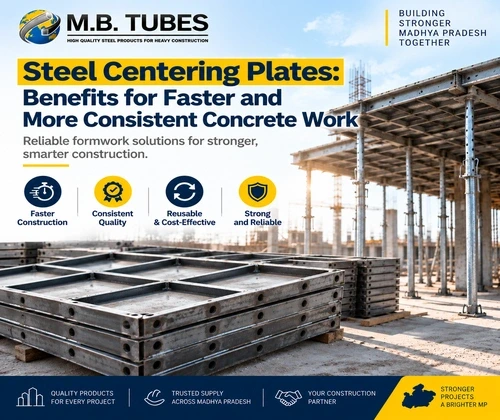

Concrete construction depends on much more than the quality of the concrete mix. Before concrete is poured, the formwork system must be properly planned, positioned, supported, and checked. When formwork is inconsistent or difficult to handle, it can affect site productivity and the quality of the finished concrete work.
Steel centering plates are widely used as reusable formwork components for slab and other concrete construction applications. Their rigid steel construction, standardised dimensions, and reusable nature can make them a practical choice for contractors working on repetitive projects.
For contractors, builders, infrastructure companies, and procurement teams searching for a reliable Centering Plate Manufacturer in Madhya Pradesh, understanding how these plates fit into the overall formwork system can help them make better purchasing decisions.
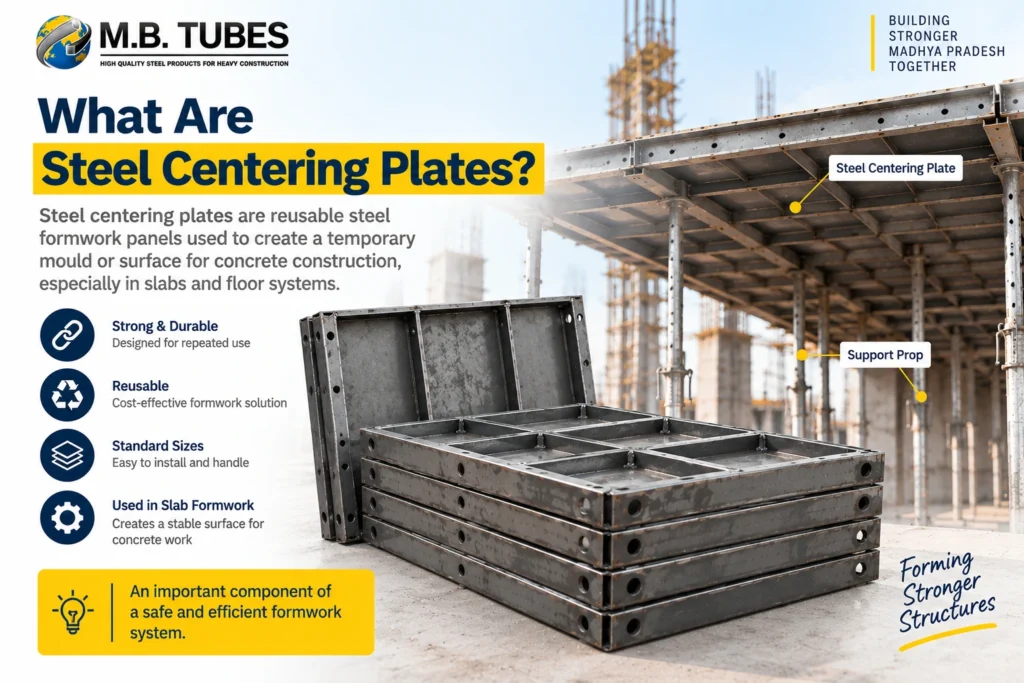
What Are Steel Centering Plates?
Steel centering plates, also commonly referred to as shuttering plates or steel formwork plates, are reusable panels used to create a temporary surface or mould for concrete work.
Depending on the formwork design, these plates may be supported using props, beams, scaffolding, or other temporary support components.
Unlike temporary materials that may need frequent replacement, properly manufactured and maintained steel plates can be reused across multiple construction cycles.
Their suitability, however, depends on the project requirements, plate specifications, condition, support arrangement, and correct installation.
Why Steel Centering Plates Matter in Concrete Construction
A formwork system needs to maintain the required shape and position while concrete is placed and develops sufficient strength.
This makes consistency particularly important.
When centering plates have standard dimensions and are used within a properly designed system, workers can follow a more repeatable installation process. This can make planning easier across floors, slabs, or similar sections of a project.
A dependable Centering Plate Manufacturer in Madhya Pradesh should therefore be evaluated not only by price but also by product dimensions, manufacturing consistency, material specifications, and bulk supply capability.
1. Faster Formwork Setup for Repetitive Work
One of the main practical advantages of steel centering plates is their suitability for repetitive formwork operations.
On multi-storey buildings and projects with similar slab layouts, formwork components often need to be removed, moved, and installed again.
Standardised steel plates can help site teams organise this cycle more efficiently.
Workers become familiar with the component sizes and installation sequence, which can reduce unnecessary adjustments compared with using inconsistent formwork materials.
However, actual installation speed depends on the complete formwork design, workforce, handling methods, project geometry, and site conditions.
2. More Consistent Formwork Dimensions
Consistency matters when construction work is repeated across large areas.
If formwork panels vary significantly in size or condition, workers may spend additional time making adjustments on site.
Steel centering plates manufactured to defined dimensions can help create a more systematic formwork layout.
When selecting a Steel Centering Plate Manufacturer in MP, buyers should confirm available plate sizes, thickness or other relevant specifications, dimensional tolerances, and compatibility with their existing formwork equipment.
This is particularly important for contractors purchasing plates in bulk.
3. Reusable for Multiple Construction Cycles
Reusability is an important reason contractors consider steel formwork products.
A properly handled centering plate may be used repeatedly, subject to its condition, design, maintenance, and the manufacturer’s specifications.
This can make steel plates attractive for contractors managing multiple slabs or ongoing construction projects.
But reusable does not mean maintenance-free.
After each use, plates should be appropriately cleaned and inspected. Bent edges, damaged surfaces, excessive corrosion, weld damage, or deformation can affect future use and should be assessed before the plate is returned to service.
4. Can Support Better Concrete Surface Consistency
The condition of the form-contact surface can influence the appearance of finished concrete.
A reasonably smooth, clean, properly aligned steel formwork surface can help produce more consistent results when the overall formwork and concrete placement process is correctly managed.
Concrete finish is not determined by the plate alone. Joint sealing, release agents, concrete mix, vibration, alignment, leakage prevention, removal practices, and workmanship also influence the result.
For this reason, buyers should avoid unrealistic claims that one formwork product automatically guarantees a particular concrete finish.
5. Suitable for Demanding Construction Environments
Construction sites are tough working environments. Formwork components are frequently moved, stacked, transported, installed, removed, and reused.
Steel centering plates are valued for their robust construction when manufactured and used appropriately.
For contractors handling repetitive slab work, durability can contribute to better long-term value compared with selecting products solely according to the lowest initial purchase price.
When comparing a Centering Plate Manufacturer in Madhya Pradesh, buyers should ask about material specifications, plate construction, edge reinforcement where applicable, welding quality, and manufacturing consistency.
6. Easier Inventory and Site Management
Standardised formwork components can also simplify inventory planning.
Instead of managing many irregular panels, contractors can organise centering plates according to defined sizes and quantities.
This makes it easier to determine:
- How many plates are available
- Which sizes are required
- How many are currently in use
- Which plates require inspection or repair
- What additional quantity may be needed for the next slab cycle
Better inventory visibility can support smoother project planning, particularly on large sites.
7. Works as Part of a Complete Formwork System
Centering plates do not work independently.
Depending on the construction methodology, they may be used with adjustable steel props, tripod systems, beams, scaffolding, ledgers, jacks, or other formwork and shoring components.
The complete arrangement must be selected and installed according to the project’s temporary works or formwork design.
Contractors purchasing from a Centering Plate Manufacturer in Madhya Pradesh should therefore consider compatibility with their existing support equipment.
This can help avoid situations where plates arrive on site but do not integrate efficiently with the planned formwork arrangement.
8. Better Value Is About Cost Per Use
The cheapest centering plate is not necessarily the most economical option.
A more useful way to think about formwork procurement is cost per effective use.
For example, a plate with a slightly higher initial cost may offer better value if it remains suitable for more construction cycles and requires fewer repairs. Conversely, a low-priced product that frequently needs replacement can become expensive over time.
Buyers should consider:
Purchase Price + Transportation + Handling + Maintenance + Expected Reuse + Replacement Requirements
This gives procurement teams a more realistic picture of long-term value.
What Buyers Should Check Before Ordering Centering Plates
Before placing a bulk order, contractors should clearly define their project requirements.
Important factors to discuss with the supplier include plate dimensions, thickness or material specification, required quantity, intended application, construction details, delivery schedule, manufacturing consistency, and any required documentation.
Buyers should also check the physical quality of supplied plates. Look at the plate surface, edges, welds, dimensions, and general workmanship.
For engineered or safety-related applications, the final selection should comply with project specifications and the approved temporary works design.
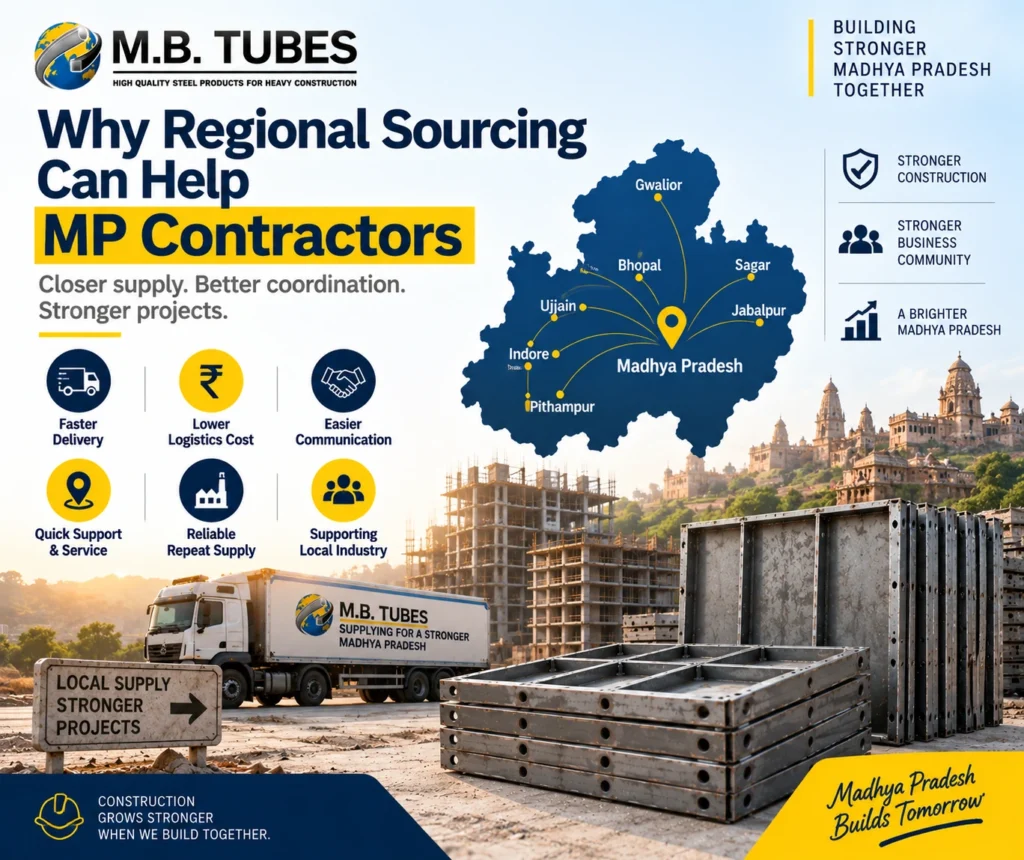
Why Regional Sourcing Can Help MP Contractors
Construction projects across Indore, Pithampur, Dewas, Bhopal, Ujjain, Jabalpur, Gwalior, Sagar, Satna, Rewa, Ratlam, and other parts of Madhya Pradesh can require substantial quantities of formwork equipment.
Working with a regional Centering Plate Manufacturer in Madhya Pradesh may simplify communication, logistics, phased procurement, and repeat-order coordination.
For example, if a contractor requires additional plates for an upcoming slab cycle, having an accessible regional supplier can make requirement discussions and dispatch planning more manageable.
Regional location alone, however, should not determine supplier selection. Product consistency, specifications, manufacturing capability, service, and delivery reliability remain equally important.
Centering Plates vs Other Formwork Options
Construction projects can use different formwork materials and systems, including steel, plywood-based systems, aluminium formwork, and engineered modular solutions.
No single option is automatically best for every project.
Steel centering plates can be particularly useful where reusability, standardised dimensions, durability, and repetitive formwork cycles are important.
The correct choice depends on project scale, slab geometry, construction cycle, labour availability, handling arrangements, budget, and engineering requirements.
How to Get Better Performance From Steel Centering Plates
Good equipment performs best when accompanied by good site practices.
Contractors should store plates appropriately, avoid unnecessary impact during handling, clean form-contact surfaces after use, inspect plates before reuse, follow the specified formwork layout, and separate damaged components for assessment.
A simple maintenance routine can help protect the contractor’s investment and keep the formwork inventory organised.
Choosing a Centering Plate Manufacturer in Madhya Pradesh
A professional supplier should be able to discuss more than just the rate per plate.
Before finalising your order, evaluate whether the manufacturer can provide clear specifications, consistent dimensions, bulk quantities, appropriate manufacturing quality, reliable dispatch planning, and support for repeat requirements.
For contractors working across MP, the right Centering Plate Manufacturer in Madhya Pradesh should offer a combination of suitable products and dependable supply rather than competing only on price.
Final Thoughts
Steel centering plates can provide a practical formwork solution for contractors looking to create a more organised and repeatable concrete construction process.
Their potential advantages include reusability, standardised sizing, durable construction, easier inventory management, and suitability for repetitive formwork cycles.
The key is selecting plates according to actual project requirements and using them as part of a properly planned temporary support system.
For construction businesses sourcing from a Centering Plate Manufacturer in Madhya Pradesh, focusing on product consistency, specifications, compatibility, maintenance, and supply reliability can deliver greater long-term value than choosing on initial price alone.
When the right equipment, planning, and site practices come together, formwork becomes more than temporary support—it becomes an important part of an efficient concrete construction workflow.
Frequently Asked Questions (FAQs)
1. What are steel centering plates used for in construction?
Steel centering plates are reusable formwork components commonly used for slab and concrete work. They provide a temporary surface for concrete placement and are typically supported by props, beams, scaffolding, or other components according to the approved formwork design.
2. How do I choose a Centering Plate Manufacturer in Madhya Pradesh?
Check the manufacturer’s plate dimensions, material specifications, manufacturing consistency, workmanship, bulk production capability, delivery reliability, and support for repeat orders. Buyers should select products according to their actual project and formwork requirements.
3. What are the benefits of using steel centering plates?
Steel centering plates can offer several practical benefits, including reusability, standardised dimensions, durable construction, easier inventory management, and suitability for repetitive concrete work when correctly maintained and used.
4. Can steel centering plates be reused on multiple construction projects?
Yes, steel centering plates are commonly reusable, provided they remain in suitable condition. Plates should be cleaned and inspected after use for deformation, damaged edges, weld issues, excessive corrosion, or other defects before being reused.
5. Why should MP contractors consider a regional centering plate supplier?
Working with a regional Centering Plate Manufacturer in Madhya Pradesh may simplify transportation, communication, phased deliveries, and repeat-order coordination. Contractors should still compare product quality, specifications, manufacturing capacity, and overall supply reliability before ordering.