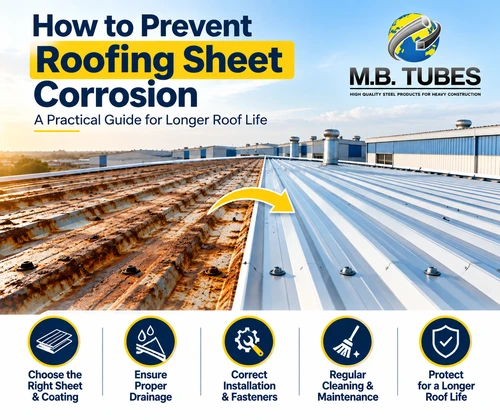

How to Prevent Roofing Sheet Corrosion: A Practical Guide for Longer Roof Life
A metal roof may look strong from the outside, but its long-term performance depends heavily on how well it is protected from moisture, damaged coatings, poor drainage and unsuitable installation practices. Roofing Sheet Corrosion can begin in small areas—around scratches, cut edges, fasteners or places where water remains trapped—and gradually affect the appearance and performance of the roofing system.
For factories, warehouses, industrial sheds and commercial buildings, prevention should begin before installation, not after rust becomes visible.
Khambati Steel & M.B. Tubes offers colour-coated roofing sheets with Zinc and Aluzinc coating options for industrial, commercial and infrastructure applications. Its roofing range includes different thicknesses, coating specifications and custom lengths based on project requirements. MB Tubes
This guide explains how to reduce the risk of Roofing Sheet Corrosion through better material selection, handling, installation, drainage and maintenance.
What Is Roofing Sheet Corrosion?
Roofing Sheet Corrosion is the deterioration of metal roofing when the material reacts with moisture and its surrounding environment.
A roofing sheet is normally protected through metallic coatings, paint systems or a combination of protective layers. When this protection becomes damaged or unsuitable for the environment, the underlying metal can become more vulnerable.
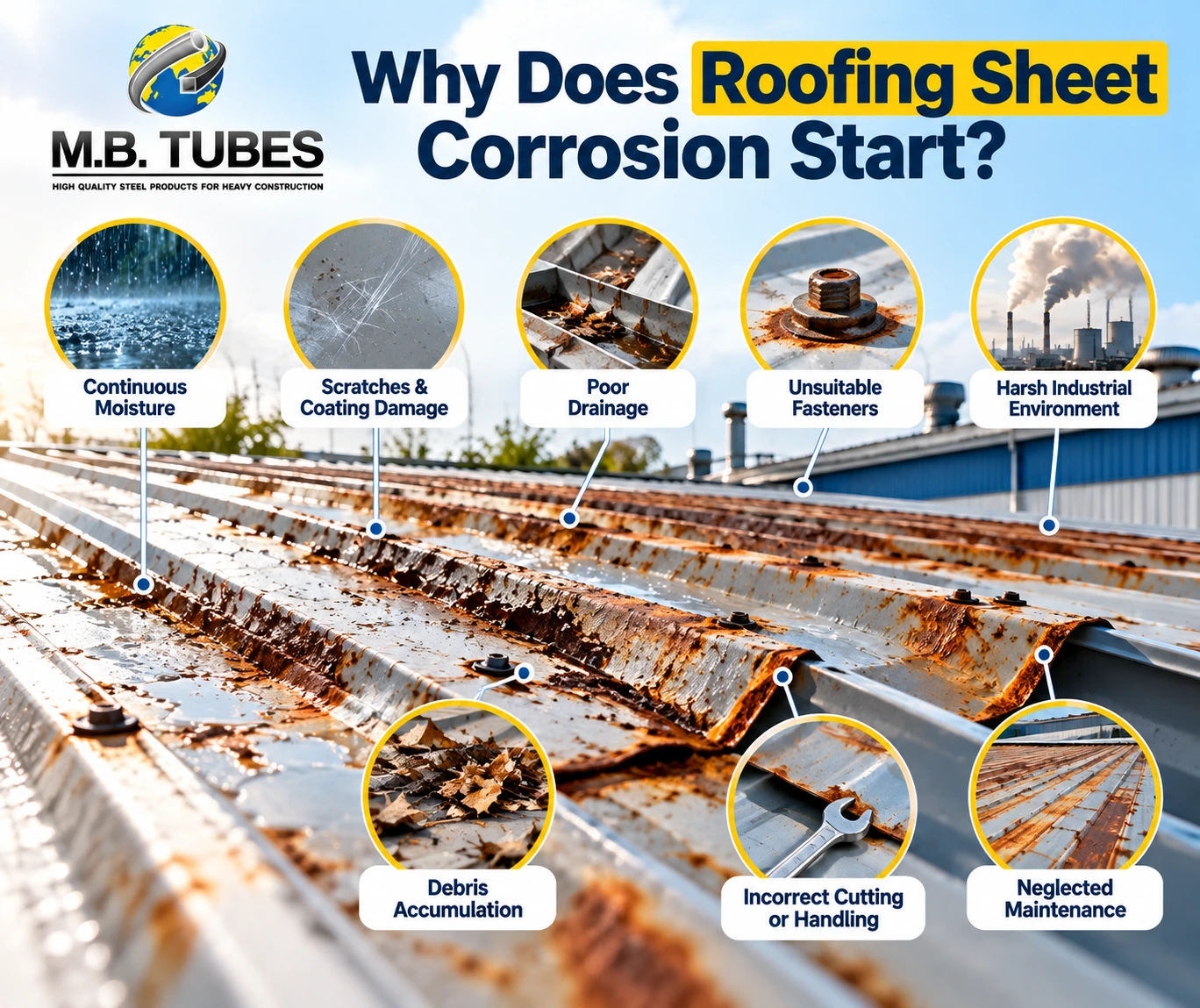
Corrosion risk can increase due to:
- Continuous moisture or water retention
- Scratches and coating damage
- Poor drainage
- Incorrect cutting or handling
- Unsuitable fasteners
- Aggressive industrial environments
- Neglected maintenance
- Debris accumulating on the roof
The important point is that corrosion is rarely just a “sheet problem.” The complete roofing system and its environment matter.
Why Does Roofing Sheet Corrosion Start?
For a useful answer, think in terms of four factors:
Material + Environment + Installation + Maintenance
A good roofing sheet can still develop problems if it is handled carelessly or installed incorrectly. Similarly, excellent installation cannot compensate for a roofing specification that is unsuitable for the site’s exposure conditions.
M.B. Tubes notes that industrial roofing may face rain, moisture, dust, heat and changing weather conditions, while some sites can also experience industrial emissions or chemical exposure. MB Tubes
That makes project-specific material selection the first line of defence.
1. Choose the Right Roofing Sheet for the Environment
Corrosion prevention begins at the buying stage.
Before selecting a roofing sheet, consider where the building is located and what the roof will face every day.
A normal warehouse may have different requirements from a manufacturing plant exposed to high humidity, industrial pollutants or chemicals.
M.B. Tubes provides Colour Coated, PPGI and PPGL roofing solutions for industrial applications. Its colour-coated profile sheet range includes Zinc and Aluzinc coating options, with coating specifications varying according to project requirements. MB Tubes
Rather than asking only:
“What is the roofing sheet price?”
A better question is:
“Which roofing specification is appropriate for my building and its environment?”
That change in buying strategy can make a major difference to long-term roof performance.
2. Understand the Protective Coating
The visible colour is not the entire roofing sheet.
A colour-coated steel product can involve multiple layers working together:
Steel Substrate → Metallic Coating → Pretreatment → Primer → Topcoat → Back Coat
The metallic and paint coatings help protect the underlying steel from environmental exposure. M.B. Tubes explains that PPGI uses galvanized zinc protection, while PPGL uses an aluminium-zinc metallic coating. MB Tubes
This is why buyers should not compare two sheets only by colour.
Ask about the base material, coating type, coating specification, thickness and intended application.
3. Avoid Scratching the Sheet During Handling
A small scratch may look unimportant during installation, but damaged protective layers can expose the material beneath.
Roofing sheets should therefore be handled carefully during:
Loading → Transport → Unloading → Storage → Lifting → Installation
Avoid dragging one sheet roughly across another. Care should also be taken when tools, ladders or other materials are placed on finished roofing surfaces.
If a sheet is damaged during handling, assess the affected area before installation rather than simply hiding it under another component.
Good corrosion prevention begins before the sheet reaches the roof.
4. Store Roofing Sheets Properly Before Installation
Roofing sheets may spend days or weeks at the project site before installation.
Poor storage can expose them to unnecessary moisture.
Sheets should be stored according to the manufacturer’s or supplier’s recommendations, protected from damaging site conditions and handled so that water does not remain trapped between stacked sheets.
This is especially important during monsoon or humid conditions.
The goal is simple:
Keep the protective surface protected before installation begins.
5. Pay Attention to Cut Edges and Site Cutting
Roofing sheets often need cutting around corners, penetrations, roof ends or special details.
These areas require attention because site cutting can affect the protective finish around an edge.
Use appropriate cutting methods and follow the roofing manufacturer’s recommended procedure. Remove metal filings and cutting debris from the roof instead of leaving them on the finished surface.
Tiny metal particles can rust and create staining that may be mistaken for corrosion of the main roofing sheet.
Accurate factory-supplied lengths can also reduce unnecessary site cutting. M.B. Tubes offers roofing sheets in custom lengths according to project requirements. MB Tubes
6. Use Suitable Fasteners and Roofing Accessories
A roof is a system, not just a group of sheets.
Depending on the project, the complete system may include roofing sheets, fasteners, washers, ridge covers, flashings, gutters, trims, closures and sealants.
M.B. Tubes similarly highlights the importance of coordinating fasteners, flashings and other accessories with the roofing system. MB Tubes
Incorrect or incompatible components can create weak points where moisture enters or remains trapped.
Pay particular attention to fixing points because every fastener creates an interface with the roofing sheet.
7. Design the Roof for Effective Water Drainage
Standing water and persistent moisture are enemies of metal roofing.
The roof should be designed and installed so rainwater can move toward the intended drainage points rather than remaining in low areas.
Keep gutters and drainage paths clear of leaves, dust, packaging material and other debris.
Also inspect areas around:
- Valleys
- Gutters
- Flashings
- Roof penetrations
- Overlaps
- Drain outlets
These locations deserve more attention because they can collect moisture when drainage or detailing is poor.
Good drainage is corrosion prevention.
8. Keep the Roof Surface Clean
Industrial roofs can accumulate dust, leaves and other deposits over time.
Debris can hold moisture against the roofing surface and make inspection more difficult.
A planned maintenance routine should therefore include appropriate roof cleaning, particularly around gutters and drainage channels.
The frequency will depend on the building environment. A relatively clean warehouse may need a different schedule from a plant exposed to heavy dust or industrial deposits.
Avoid aggressive cleaning methods or chemicals that could damage the coating. Follow the relevant product and coating maintenance recommendations.
9. Inspect Roofing Sheets Regularly
Do not wait for widespread rust before inspecting the roof.
Periodic inspection helps identify small problems while they are still localized.
Look for signs such as coating damage, scratches, unusual discoloration, loose or deteriorated fasteners, blocked gutters, water-retaining debris and deterioration around penetrations or flashings.
For industrial buildings, inspections can also be useful after severe weather or after contractors have carried out rooftop work.
The strategy is:
Inspect Early → Identify the Cause → Correct It → Protect the Area
Preventive maintenance is usually more manageable than dealing with extensive deterioration later.
10. Avoid Mixing Incompatible Materials Without Checking
Industrial roofs often contain multiple metals and accessories.
Different materials should not be combined casually simply because they physically fit together. Material compatibility, fasteners, drainage and the actual site environment should be considered as part of the roofing specification.
This is another reason to treat roofing as a complete system.
When unsure, confirm compatibility with the roofing supplier or relevant project specification rather than making assumptions on site.
A Simple Roofing Corrosion Prevention Checklist
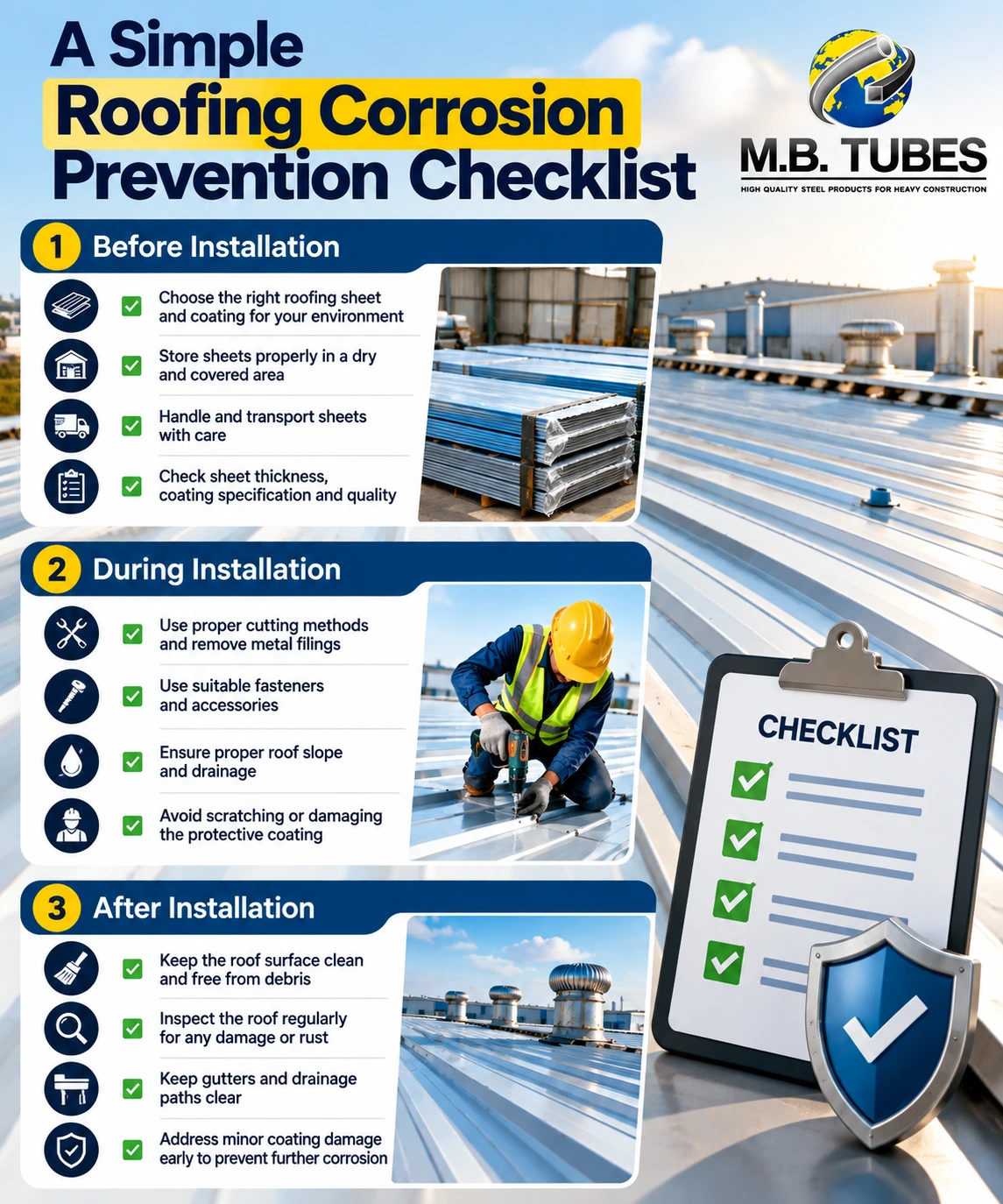
Before installation, check the roofing material, coating specification, sheet thickness, project environment and storage conditions.
During installation, protect sheet surfaces, use appropriate cutting practices, remove metal debris, install suitable accessories and maintain proper drainage.
After installation, inspect the roof periodically, keep gutters clear, check vulnerable areas and address localized coating damage or other issues according to the appropriate maintenance procedure.
This creates a simple three-stage strategy:
Specify Correctly → Install Carefully → Maintain Regularly
Roofing Solutions from Khambati Steel & M.B. Tubes
Khambati Steel & M.B. Tubes manufactures and supplies roofing solutions for factories, warehouses, industrial sheds, commercial buildings and infrastructure projects.
Its colour-coated roofing range is available in multiple thicknesses, strengths, colours and coating options. The company’s website currently lists thicknesses from 0.35 mm to 0.80 mm, standard width of 1070 mm, strength options from 250 MPa to 550 MPa, and Zinc/Aluzinc coating options from 70 GSM to 200 GSM, depending on project requirements. MB Tubes
For buyers concerned about Roofing Sheet Corrosion, the better approach is to share the building application, environmental conditions and required roofing specifications rather than selecting sheets only on price or appearance.
Frequently Asked Questions
What causes Roofing Sheet Corrosion?
Roofing Sheet Corrosion can be influenced by prolonged moisture exposure, damaged protective coatings, poor drainage, scratches, unsuitable material combinations, installation issues and aggressive environmental conditions. The exact cause should be identified before deciding on corrective action.
How can Roofing Sheet Corrosion be prevented?
Start with a roofing specification suited to the project environment. Protect sheets during transport and installation, avoid unnecessary coating damage, use suitable fasteners and accessories, maintain effective drainage, remove debris and inspect the roof periodically.
Are colour-coated roofing sheets corrosion resistant?
Colour-coated steel roofing is designed with protective coating systems that help provide corrosion and weather resistance. However, actual performance depends on the sheet specification, coating system, environment, installation quality and maintenance. M.B. Tubes offers Zinc and Aluzinc coating options for its colour-coated roofing sheets. MB Tubes
Can scratches cause roofing sheets to rust?
Damage to protective coating layers can make an affected area more vulnerable to environmental exposure. Scratches should therefore not be ignored. Careful handling during transportation, storage and installation helps reduce avoidable surface damage.
How often should industrial roofing be inspected?
There is no single inspection interval suitable for every building. The appropriate schedule depends on environmental exposure, roof design, building use and applicable maintenance guidance. Industrial roofs should also be checked when severe weather or rooftop work may have caused damage.