
How to Choose Roofing Sheet Thickness? A Practical Guide for Buyers
Choosing the right roofing sheet thickness is one of the most important decisions when planning an industrial shed, warehouse, commercial building or residential roofing project. While colour, profile and appearance are often the first things buyers notice, thickness plays an important role in roof performance, durability and overall project cost.
A thicker roofing sheet is not necessarily the best choice for every building. The right selection depends on the roof design, supporting structure, environmental conditions and expected loads.
This guide explains how to select roofing sheets that balance performance, durability and budget without investing in unnecessary material.
Quick Answer: How to Choose Roofing Sheet Thickness?
Choose roofing sheet thickness by considering the building application, wind loads, support spacing, steel grade, roofing profile, protective coating and environmental conditions. Industrial and heavy-duty roofing projects may require different specifications from smaller residential structures. Always match the sheet thickness with the approved structural design and project requirements.
What Is Roofing Sheet Thickness?
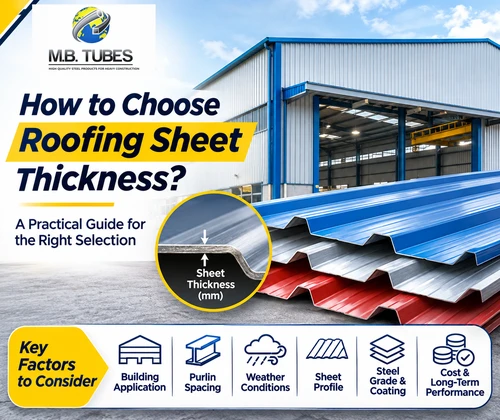
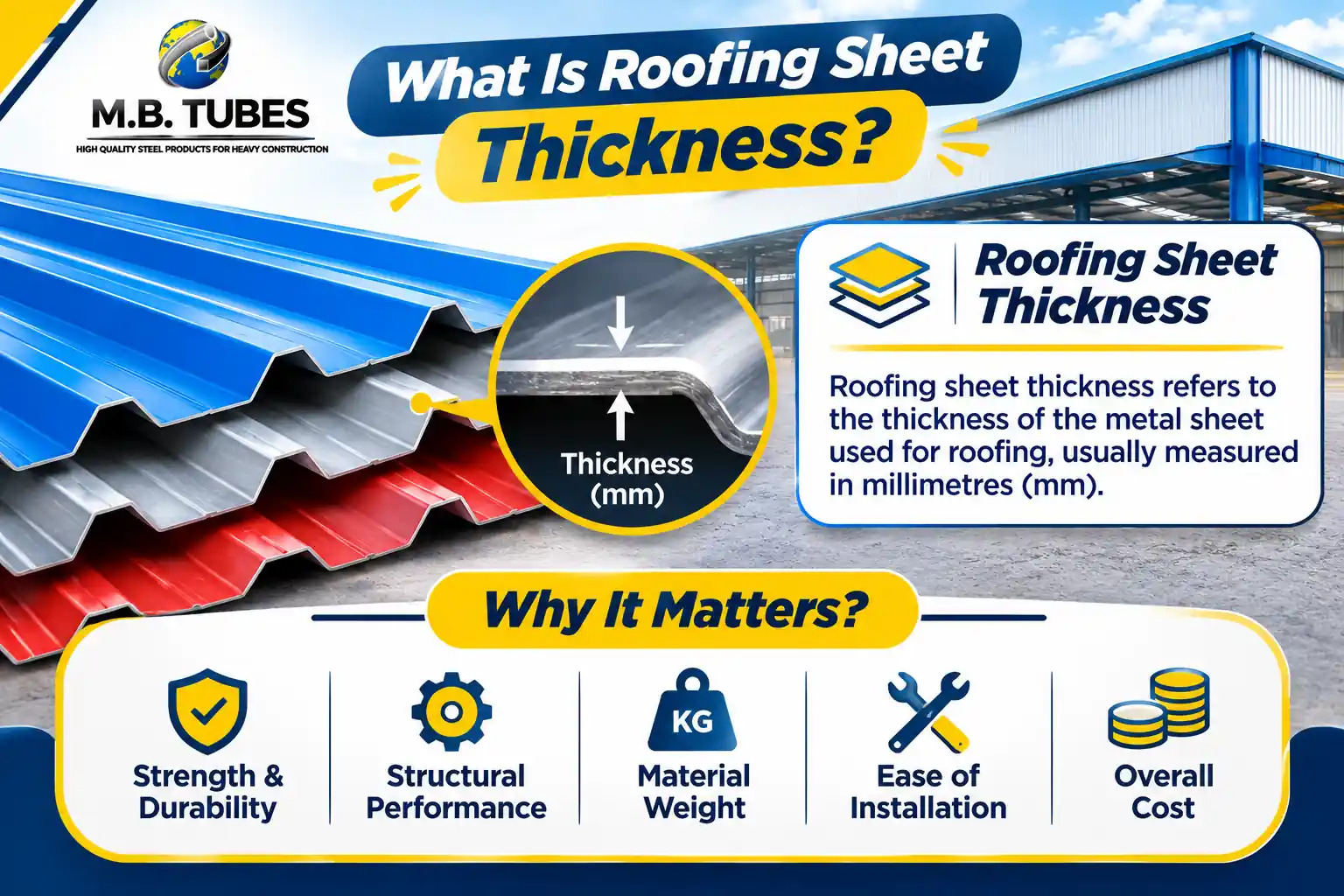
Roofing sheet thickness refers to the thickness of the metal sheet used to cover a building. It is generally measured in millimetres (mm).
Thickness influences several characteristics of a roofing sheet, including:
- Resistance to bending and deformation
- Structural performance
- Material weight
- Handling and installation
- Overall roofing cost
- Resistance to certain forms of physical damage
However, thickness alone does not determine the quality or suitability of a roofing sheet. Material grade, profile geometry and protective coatings are equally important.
Understand BMT and TCT Before Buying Roofing Sheets
Two roofing sheets may appear identical but have different base metal thicknesses. This is why buyers should understand two common industry terms.
Parameter | Meaning |
BMT – Base Metal Thickness | Thickness of the base steel without protective coatings. |
TCT – Total Coated Thickness | Overall thickness, including the applicable coating layers. |
When comparing quotations from roofing sheet manufacturers, confirm whether the stated thickness refers to BMT or TCT.
Comparing different thickness measurement methods can result in an inaccurate assessment of material quantity, price and performance.
Roofing Sheet Thickness Selection Chart
Different roofing applications have different requirements. The following table provides illustrative thickness ranges for initial product discussions, not final engineering recommendations.
Roofing Application | Illustrative Thickness Range |
Small residential roofing | 0.35–0.45 mm |
Parking sheds and canopies | 0.40–0.50 mm |
Commercial buildings | 0.45–0.60 mm |
Industrial sheds | 0.45–0.70 mm |
Warehouses | 0.50–0.70 mm |
Heavy-duty industrial roofing | 0.60–0.80 mm |
The final thickness and measurement basis must be confirmed according to the structural design, roofing profile, steel grade, support spacing and expected loads.
7 Factors to Consider When Choosing Roofing Sheet Thickness
1. Identify the Purpose of the Building
Start by understanding what the building will be used for.
A small parking shed has different roofing requirements from a manufacturing facility or large warehouse.
Industrial buildings may require roofing systems designed for wider spans, maintenance activities and more demanding environmental conditions.
Understanding the application helps narrow down suitable roofing sheet specifications.
2. Check the Distance Between Roof Supports
Roofing sheets are generally supported by structural members known as purlins.
The distance between these supports affects how the roofing sheet performs under loading.
Wider support spacing may require a different sheet thickness, stronger profile or higher steel grade.
Selecting thickness without reviewing the supporting framework can lead to unsuitable material selection.
3. Consider Local Weather Conditions
Roofing sheets are continuously exposed to changing weather conditions.
Consider the following environmental factors:
- Heavy rainfall
- Strong winds
- High temperatures
- Humidity and moisture
- Industrial pollutants
Buildings in demanding environments require roofing systems designed to handle the expected exposure.
Thickness, coating and fastening arrangements should be evaluated together.
4. Evaluate the Roofing Sheet Profile
Roofing profile refers to the shape formed into the metal sheet.
Different profiles provide different levels of stiffness and structural performance.
Two roofing sheets with identical thicknesses may perform differently because of their rib height, profile geometry and supporting arrangements.
Always evaluate the complete roofing profile rather than selecting material based only on thickness.
5. Confirm the Steel Grade
Steel grade is another important factor when selecting roofing materials.
It influences the mechanical properties of the base metal, including its yield strength.
A thicker sheet does not automatically provide better performance than a thinner sheet manufactured using a different steel grade and profile.
The selected combination should meet the approved project specifications.
6. Check the Protective Coating
Roofing sheet durability also depends on protection against corrosion.
Common roofing materials include:
- Colour Coated Roofing Sheets
- PPGI Roofing Sheets
- PPGL Roofing Sheets
- Galvanized Roofing Sheets
Protective coatings help reduce exposure of the base steel to environmental conditions.
Increasing sheet thickness is not a substitute for selecting a suitable corrosion-resistant coating.
7. Balance Initial Cost and Long-Term Performance
Thicker roofing sheets generally contain more steel and may increase material costs.
However, selecting a sheet only because it is cheaper can also result in unsuitable performance.
Consider the complete roofing investment, including transportation, installation, maintenance and expected service conditions.
Does a Thicker Roofing Sheet Always Mean Better Quality?
Not necessarily.
Roofing sheet quality depends on several factors working together.
Selection Factor | Why It Matters |
Sheet Thickness | Influences stiffness and material weight |
Steel Grade | Determines mechanical properties |
Protective Coating | Helps resist corrosion |
Roofing Profile | Influences structural performance |
Manufacturing Quality | Supports dimensional consistency |
Installation Quality | Affects overall roofing performance |
The objective should be to select a roofing sheet that meets the project’s requirements rather than simply purchasing the thickest available option.
Common Mistakes When Selecting Roofing Sheet Thickness
Many roofing procurement problems begin before installation.
Avoid comparing BMT with TCT, purchasing solely on price, ignoring purlin spacing or selecting thickness without considering wind loads.
Another common mistake is assuming that the same roofing sheet specification will work for every building.
Each project has different structural and environmental requirements. Confirming these details before ordering can help reduce unnecessary expenses and material replacement.
Roofing Sheet Buying Checklist
Before requesting a quotation, prepare the following information:
Requirement | Details to Confirm |
Building Type | Industrial, commercial or residential |
Sheet Thickness | Required BMT or TCT |
Roofing Profile | Approved profile design |
Steel Grade | Project specification |
Protective Coating | Required coating type |
Sheet Length | Based on roof measurements |
Support Spacing | As per structural design |
Quantity | Total roofing requirement |
Delivery Location | Project site |
Providing complete specifications helps manufacturers understand your requirements and prepare a more accurate quotation.
Roofing Sheet Solutions from Khambati Steel & M.B. Tubes
Khambati Steel & M.B. Tubes offers roofing sheet solutions for industrial, commercial and construction applications.
The product range includes colour-coated roofing sheets, PPGI sheets, PPGL sheets and other steel roofing solutions.
Buyers can discuss their required thickness, profile, coating, dimensions and project specifications to identify suitable roofing materials for their construction requirements.
Whether you are planning a warehouse, factory shed or commercial structure, selecting the correct roofing specifications is essential for achieving dependable performance.
Conclusion
Choosing the right roofing sheet thickness is about finding the correct balance between structural requirements, environmental protection, material quality and project cost.
Instead of focusing only on thickness, evaluate the complete roofing system, including steel grade, profile, coating and supporting structure.
Looking for roofing sheets for your next construction project?
Connect with Khambati Steel & M.B. Tubes to discuss your roofing requirements and request a quotation based on your project specifications.
Frequently Asked Questions
What is the best roofing sheet thickness for an industrial shed?
There is no universal thickness for every industrial shed. The appropriate specification depends on roof design, support spacing, wind loads, steel grade and environmental conditions.
Is a 0.50 mm roofing sheet suitable for warehouses?
A 0.50 mm roofing sheet may be suitable for certain warehouse projects when its profile, steel grade, support spacing and load performance meet the structural design requirements.
Does roofing sheet thickness affect price?
Yes. Thicker sheets generally contain more steel, which can increase material costs. Coating, grade, profile and dimensions also influence the final price.
What is the difference between BMT and TCT?
BMT refers to the thickness of the base steel, while TCT includes the applicable coating layers. Buyers should confirm the measurement basis before comparing quotations.
Does increasing roofing sheet thickness prevent corrosion?
Not directly. Corrosion resistance primarily depends on protective coatings, environmental exposure, installation quality and regular maintenance.