
Which Roofing Sheet Is Best for Industrial Sheds?
Industrial sheds require roofing materials that can withstand changing weather conditions, demanding working environments and long-term exposure to sunlight, rain and moisture. Whether you are constructing a warehouse, manufacturing factory, storage facility or industrial workshop, choosing the right roofing sheet is an important investment.
While different roofing materials offer different advantages, the right choice depends on durability, corrosion resistance, installation requirements, maintenance and overall project budget.
Quick Answer
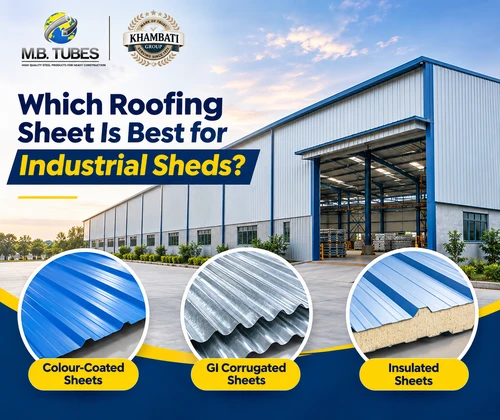
Colour-coated steel roofing sheets are often an excellent choice for industrial sheds because they offer a practical balance of durability, weather resistance and appearance. GI corrugated roofing sheets are also suitable for industrial projects where affordability and corrosion protection are priorities.
For factories and warehouses with specific temperature requirements, insulated roofing sheets may be a better option.
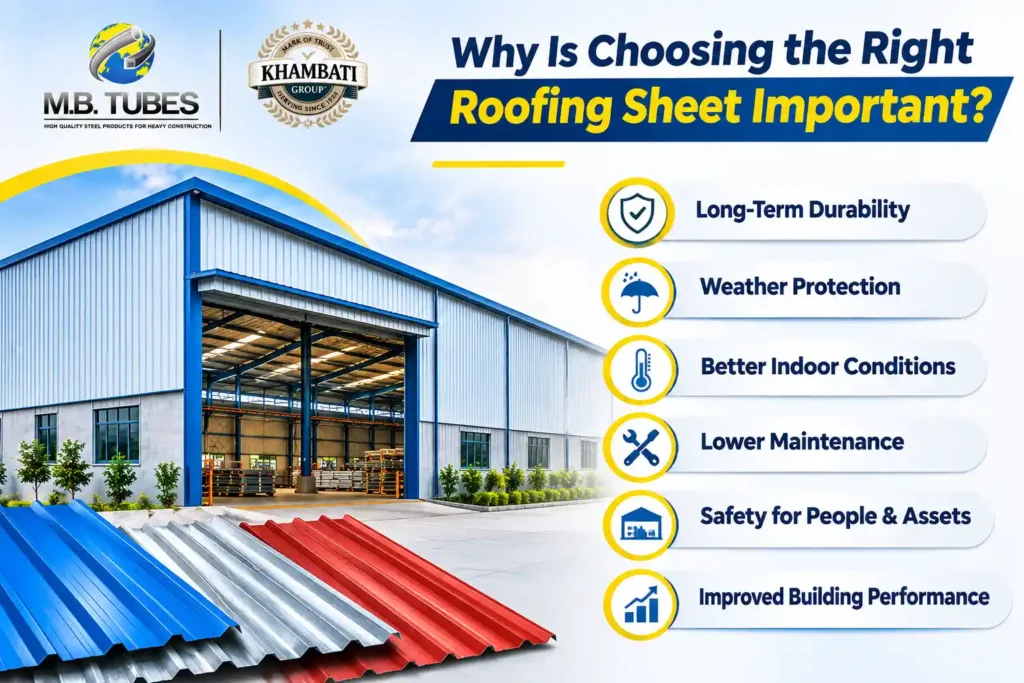
Why Is Choosing the Right Roofing Sheet Important?
An industrial roof does more than protect a building from rain and sunlight. It also influences indoor working conditions, equipment protection, maintenance expenses and the overall performance of the facility.
Poor-quality or unsuitable roofing materials can lead to water leakage, corrosion, excessive indoor heat and frequent repairs.
A properly selected roofing system offers several advantages:
- Protection against changing weather conditions.
- Improved long-term durability.
- Reduced maintenance requirements.
- Efficient rainwater drainage.
- Protection of machinery and stored goods.
- Professional industrial building appearance.
Types of Roofing Sheets Used in Industrial Sheds
1. Colour-Coated Roofing Sheets
Colour-coated roofing sheets are manufactured using metallic-coated steel with an additional protective paint layer. They are widely used in modern industrial and commercial buildings because of their functional and aesthetic benefits.
Key benefits:
- Additional surface protection.
- Good weather resistance.
- Available in various colours and profiles.
- Professional exterior appearance.
- Relatively lightweight construction.
Best suited for: Manufacturing units, warehouses, commercial sheds and pre-engineered buildings.
2. GI Corrugated Roofing Sheets
GI stands for Galvanised Iron, commonly referring to steel sheets protected by a zinc coating. Their corrugated shape improves rigidity, while the zinc coating helps protect the steel against corrosion.
Key benefits:
- Economical roofing solution.
- Practical installation.
- Good structural rigidity.
- Corrosion protection.
- Suitable for general industrial applications.
Best suited for: Storage facilities, workshops, agricultural sheds and budget-conscious industrial projects.
3. Galvalume Roofing Sheets
Galvalume roofing sheets feature an aluminium-zinc alloy coating that provides corrosion protection. They are a suitable option for many industrial environments requiring extended outdoor exposure.
Key benefits:
- Good atmospheric corrosion resistance.
- Long-term roofing performance.
- Reflective metallic surface.
- Suitable for large roofing areas.
Best suited for: Large warehouses, industrial plants and logistics centres.
4. Insulated Roofing Sheets
Insulated roofing panels typically consist of metal outer layers with an insulating core between them. They help reduce heat transfer through the roof.
Key benefits:
- Improved indoor temperature management.
- Reduced heat transfer.
- Potential energy savings.
- Improved working conditions.
Best suited for: Cold storage facilities, food processing units, pharmaceutical facilities and temperature-controlled warehouses.
Comparison of Industrial Roofing Sheets
Roofing Sheet Type | Relative Cost | Corrosion Resistance | Best Application |
GI Corrugated Sheets | Economical | Good | Workshops and storage sheds |
Colour-Coated Sheets | Moderate | Good to high | Factories and warehouses |
Galvalume Sheets | Moderate | High in suitable environments | Large industrial facilities |
Insulated Roofing Sheets | Higher | Depends on outer coating | Temperature-controlled buildings |
Actual performance depends on material specifications, environmental exposure, coating quality and installation.
How to Choose the Best Roofing Sheet for Your Industrial Shed
Check Material Thickness
Sheet thickness influences rigidity and load-bearing performance. Industrial buyers should consider base metal thickness rather than relying only on total coated thickness.
The appropriate thickness should be determined according to the roof design, purlin spacing and expected loads.
Consider Local Weather Conditions
Industrial buildings in areas experiencing heavy rainfall, high temperatures or humid conditions require suitable protective coatings and roofing profiles.
Facilities near coastal areas or chemical processing environments may require specialised corrosion protection.
Evaluate the Roofing Profile
Corrugated and trapezoidal profiles are commonly used in industrial construction. Selecting the appropriate profile helps achieve effective water drainage and structural performance.
Focus on Installation Quality
Even a high-quality roofing sheet can develop problems if installed incorrectly. Compatible fasteners, appropriate overlaps, proper roof slopes and suitable sealing arrangements are essential.
Consider Long-Term Costs
Choosing roofing sheets based only on the initial purchase price may result in higher maintenance expenses later.
Evaluate installation costs, maintenance requirements and expected service conditions before making a final decision.
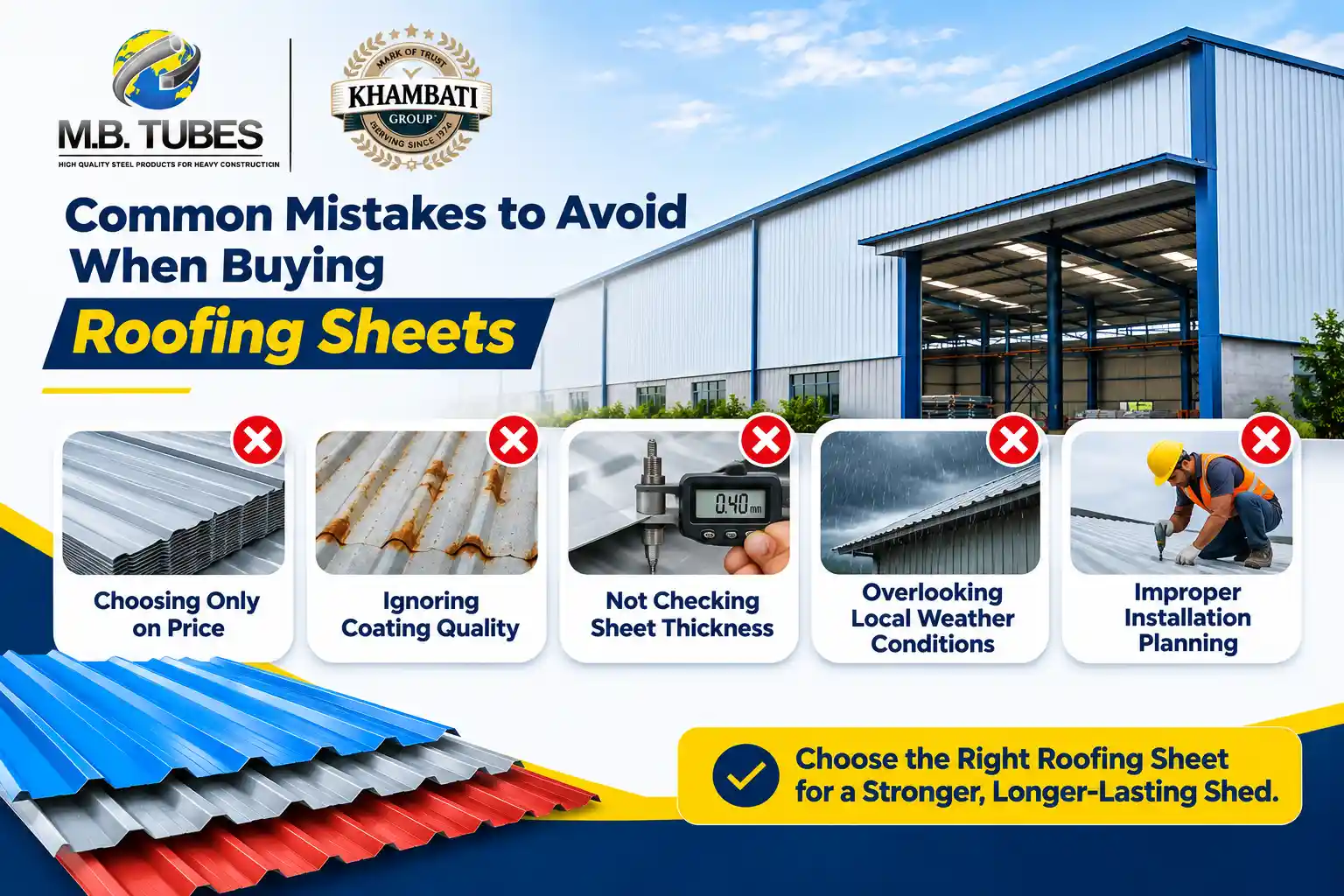
Common Mistakes to Avoid When Buying Roofing Sheets
Industrial buyers should avoid selecting roofing materials without understanding their technical specifications.
Some common mistakes include purchasing sheets based only on price, ignoring coating quality, overlooking environmental conditions and selecting unsuitable sheet thickness.
It is equally important to ensure that the roofing design meets the project’s structural requirements and that installation is carried out by qualified professionals.
Industrial Roofing Sheets from Khambati Steel & M.B. Tubes
Khambati Steel & M.B. Tubes offers steel roofing solutions for industrial, commercial and infrastructure construction requirements.
Our product range includes:
- Colour-coated roofing sheets.
- GI corrugated sheets.
- MS and GI pipes.
- Structural steel products.
- Steel scaffolding systems.
- Construction and formwork accessories.
With a focus on material quality, dimensional consistency and practical construction requirements, M.B. Tubes serves contractors, builders, industrial buyers and infrastructure developers.
Explore our steel roofing products to find suitable materials for your upcoming industrial shed project.
Conclusion
The best roofing sheet for an industrial shed depends on the building’s purpose, environmental conditions and construction budget.
Colour-coated roofing sheets are a well-balanced option for many modern industrial buildings, while GI corrugated sheets offer an economical alternative. Galvalume sheets and insulated roofing systems can be considered for more specific environmental and thermal requirements.
Investing in suitable roofing materials today can help reduce unnecessary maintenance costs and support long-term building performance.
Choose Khambati Steel & M.B. Tubes for quality-focused steel roofing and construction solutions.
Frequently Asked Questions (FAQs)
Which roofing sheet is best for factory sheds?
Colour-coated steel roofing sheets are a practical choice for many factory sheds because of their durability, protective coating and professional appearance.
Are GI roofing sheets suitable for industrial buildings?
Yes, GI corrugated sheets are commonly used in industrial workshops, warehouses and storage facilities where economical roofing is required.
Which roofing sheet is best for hot weather?
Insulated roofing panels and suitable light-coloured reflective roofing systems can help reduce indoor heat gain.
What is the difference between GI and colour-coated roofing sheets?
GI sheets have a protective zinc coating, while colour-coated steel sheets generally feature an additional paint layer over a metallic-coated substrate.
What thickness is suitable for industrial roofing sheets?
The required thickness depends on the steel grade, roofing profile, purlin spacing, wind loads and structural design.